


Among the diverse sherry elaboration methods, few are as visually striking and historically rooted as “soleo”, the traditional grape dehydration technique used primarily for pedro ximénez wines. Known locally as “asoleo”, this practice involves exposing freshly harvested grapes to the intense sun so that they gradually lose water and concentrate sugars, acids, and aromatic compounds.
While the technique might appear simple, the asoleo process demands careful control and experience. Too little sun and the grapes are weakened or spoiled; too much exposure and they risk balance. Timing, weather, and vineyard management all become decisive factors.
Learn everything you need to know about pedro ximénez, the variety and wine style crafted with this genuine technique.
What Is Soleo (Asoleo)?
Definition and Meaning in Sherry Production
Soleo, or asoleo, refers to the controlled sun-drying of grapes immediately after harvest. The name derives from the Spanish word “sol” (sun), which hints at the fundamental principle that grapes are laid out under sunlight to slowly and steadily dehydrate.
Within the context of sherry crafting methods, asoleo is not used for every wine style. Dry wines such as fino or amontillado rely on fresh grapes pressed immediately after harvest. But for wines made from pedro ximénez asoleo, dehydration is essential.
You can expand your knowledge about fino and amontillado below:
The process dramatically alters the composition of the fruit. Water evaporates from the berries while sugars and other compounds remain. This concentration leads to a thicker grape must that may reach extraordinary sugar levels even before fermentation begins. Once pressed, the resulting must becomes the foundation of wines that are later aged through the solera and criadera system, the dynamic aging method that defines the region.
Why Asoleo Is Essential for Pedro Ximénez Wines
Without asoleo, pedro ximénez wines would not exist in their most familiar form. The grape itself, although sweet, does not contain enough sugar to produce the intensely rich style associated with this wine style.
Through dehydration, the sugar concentration multiplies. Grapes that initially contain moderate sugar levels become almost raisin. The resulting must can reach densities far beyond other concentration techniques such as passito or other famous dehydration techniques.
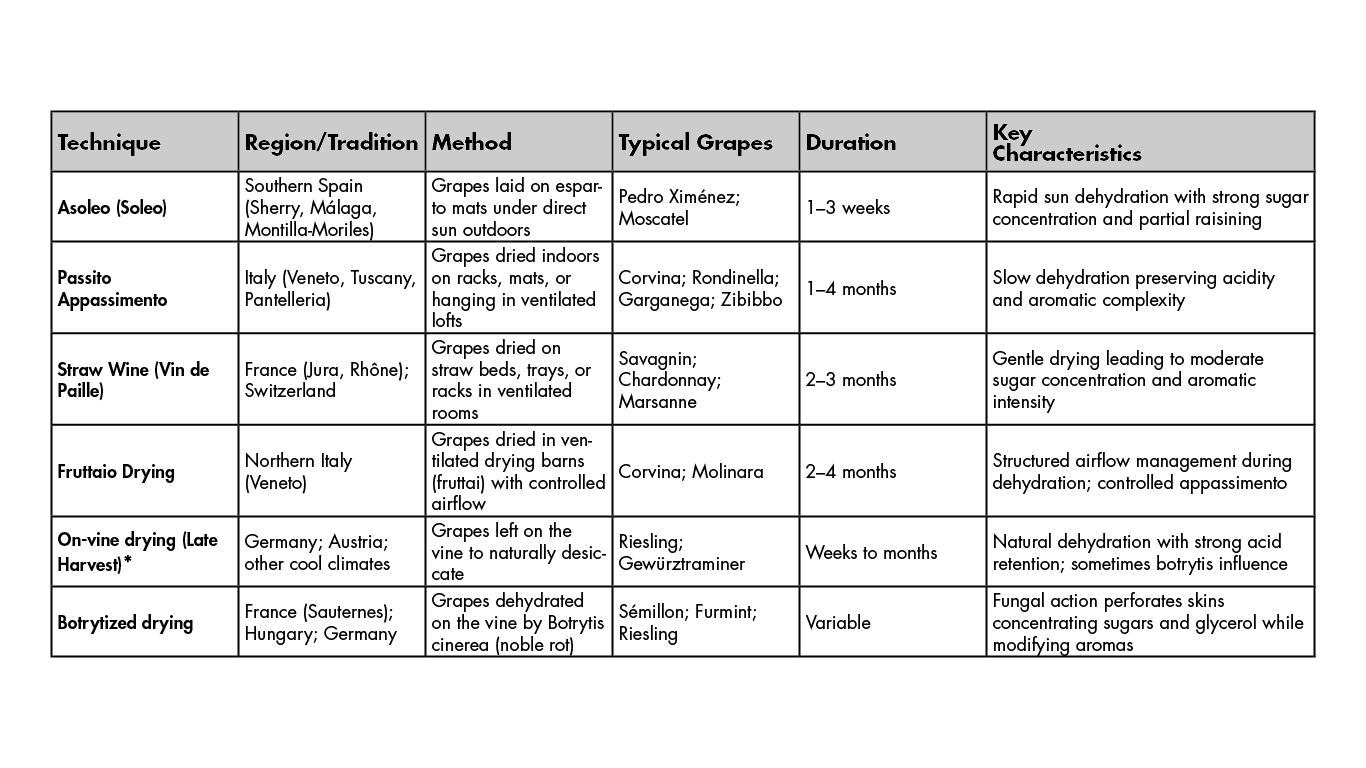
This process creates the signature profile of PX sherry wines:
1. Exceptionally high natural sweetness
2. Velvety texture and smooth mouthfeel
3. Aromas of raisins, figs, molasses, and coffee
4. Remarkable concentration
The Historical Origins of Asoleo in Andalusia
Traditional Practices in Jerez and Montilla-Moriles
The practice of sun drying grapes in Spain rises above the modern wine industry, upheld by centuries. Historical evidence suggests that grape dehydration was already used in the Mediterranean during classical antiquity, when sweet wines were highly prized.
In Andalusia, the technique became particularly associated with two regions:
– Sherry region
– Montilla-Moriles, where pedro ximénez thrives in warmer inland conditions
Both regions share similar climatic advantages: sunshine, low rainfall during harvest, and breezy conditions that help prevent rot during drying.
Traditionally, harvested grapes were spread across open areas known as paseras, where workers arranged them carefully to maximize sun exposure. Families and vineyard workers would oversee the process daily, turning the grapes and protecting them if weather conditions shifted.
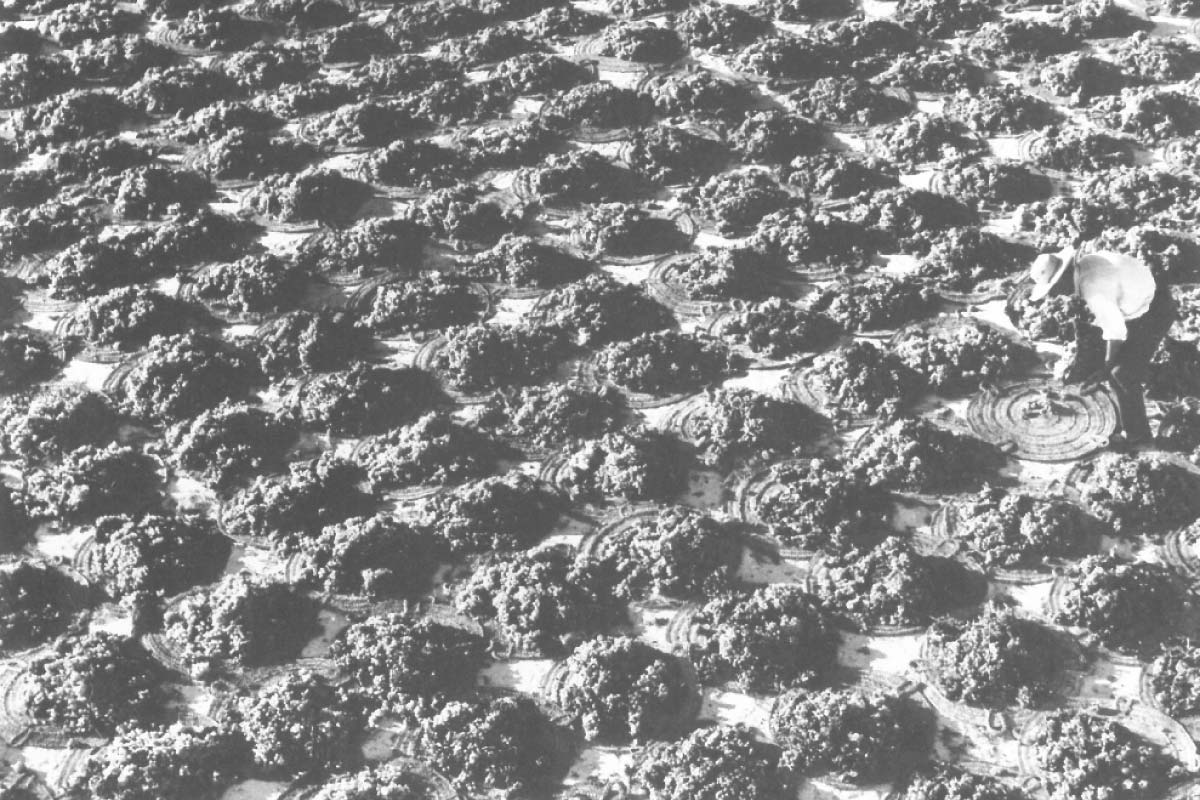
It was physically demanding work, and still is today. But it remains an essential step in the production of PX wines.
Evolution from Ancient Sun-Drying to Modern Control
Despite its ancient origins, asoleo has gradually evolved. While the fundamental principle remains unchanged, modern producers apply greater precision to the process.
The goal is not to industrialize asoleo but to maintain tradition while reducing risk. Rainfall during drying, for example, can quickly ruin a batch of grapes. Modern forecasting and vineyard logistics allow producers to react more efficiently when conditions change.
Even so, asoleo remains deeply dependent on nature. Unlike controlled indoor dehydration systems used in other regions, Andalusian producers still rely primarily on the sun.
How the Soleo Process Works
Harvesting and Selection of Grapes
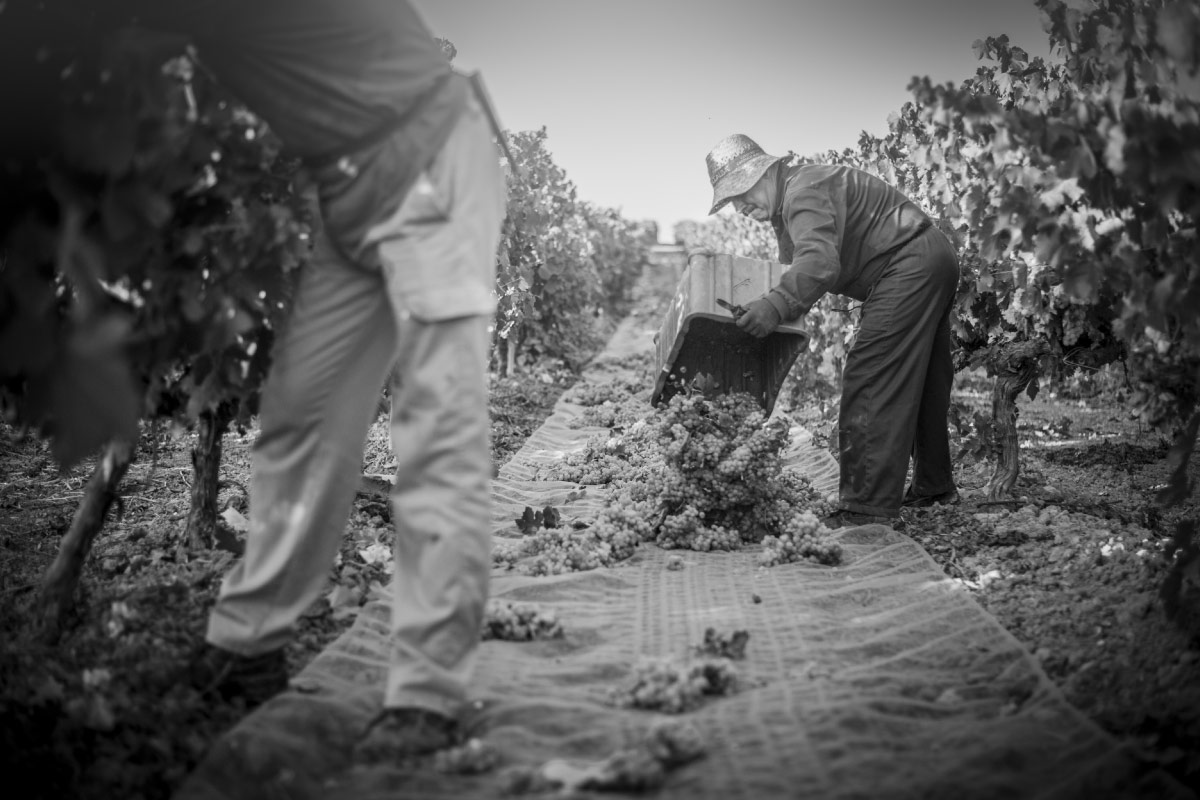
The PX winemaking process begins with the harvest of perfectly ripe pedro ximénez grapes. Timing is critical. The grapes must reach full maturity, with balanced acidity and sugar levels, before they can undergo dehydration. Harvest typically occurs in late summer when the region’s climate provides intense sunlight and minimal rainfall.
Once picked, the grapes are carefully placed on the drying area to prevent premature crushing.
Sun Exposure on Esparteras (Drying Mats)
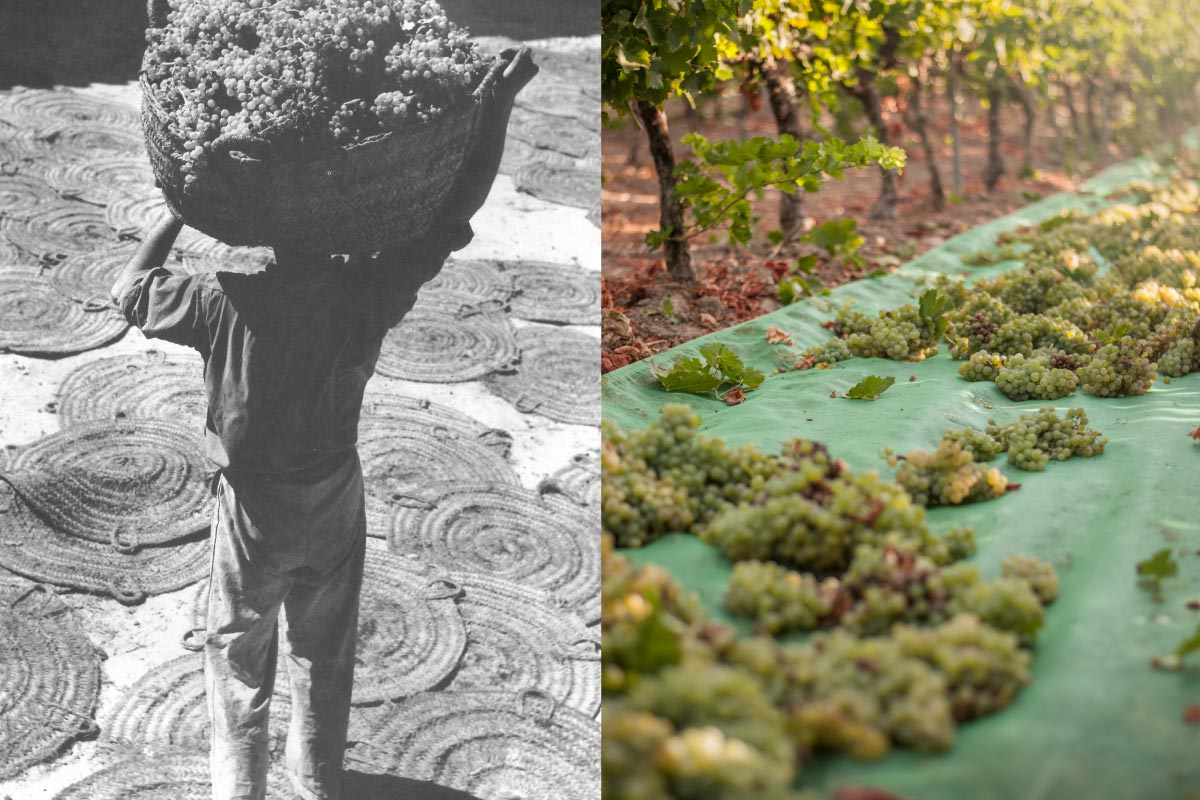
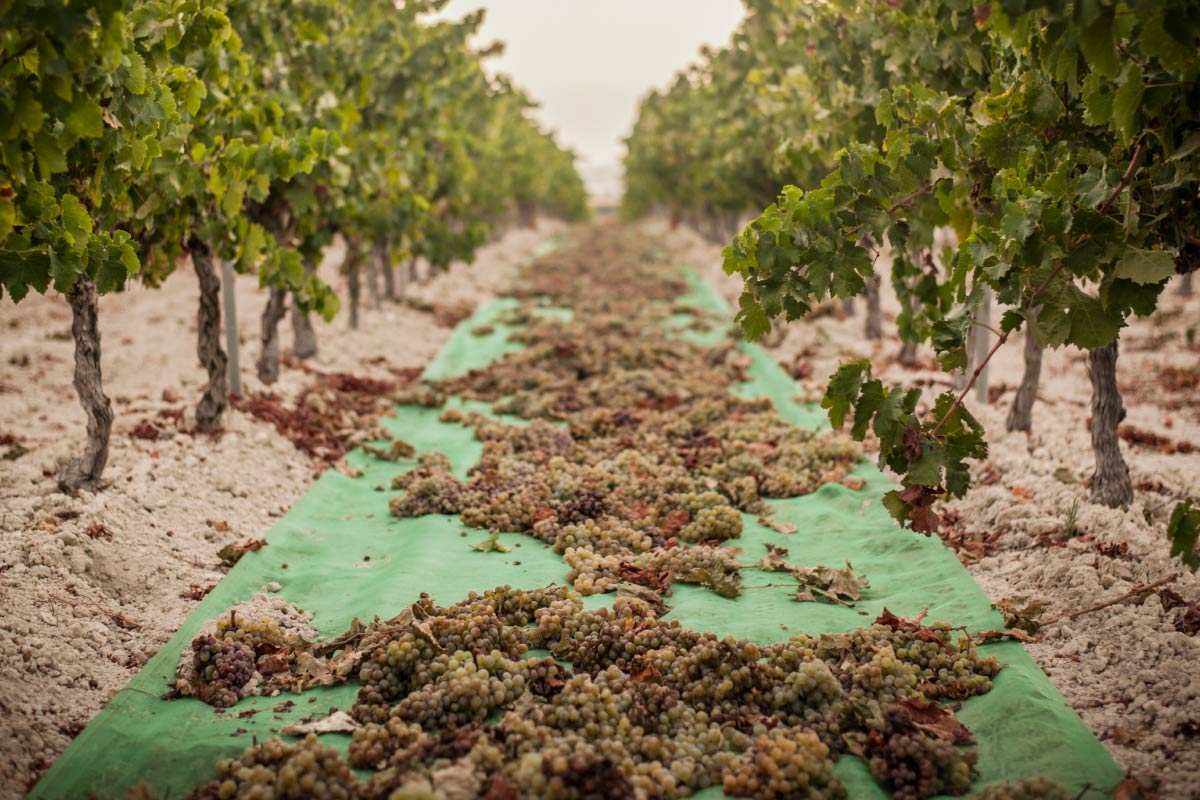
The grapes are laid out on “paseras”, traditional mats made from esparto grass if old or made from more modern fabrics if new. These mats allow airflow beneath the fruit while preventing direct contact with the soil. The paseras are spread across vine lines, where the grapes are fully exposed to the sun while also being protected by the vine leaves. During this stage the asoleo technique begins to transform the fruit. Under intense sunlight, the grapes slowly shrivel as water evaporates from the skin.
Duration, Turning, and Monitoring
The asoleo process typically lasts between several days and two weeks, depending on weather conditions.
During this period foremen, winemakers and farmers must constantly monitor the grapes. Their tasks include:
1. turning the grapes to ensure even dehydration
2. removing damaged berries
3. covering the grapes at night to protect against humidity
This stage is where human experience becomes invaluable. The ideal level of dehydration must be achieved without allowing excessive concentration, or microbial growth.
Climatic Conditions and Risks
Asoleo relies heavily on the Jerez region’s climate. The region offers several advantages:
– High solar radiation
– Warm to high temperatures
– Dry winds from the East (Levante)
However, these benefits also bring risks. Rain can cause rapid spoilage, while excessive heat may damage the grapes.
Learn more about winds that shape the region’s personality
As a result, vineyard teams must constantly adapt to changing weather patterns during the drying period.
What Happens Inside the Grape During Asoleo?
The transformation occurring during grape dehydration technique is both physical and biochemical.
As water evaporates, several key changes take place:
1. Sugar concentration increases dramatically
2. Acids become more concentrated
3. Aromatic precursors intensify
4. Enzymatic reactions modify flavor compounds
The berry skin gradually wrinkles as internal pressure decreases. At the same time, the pulp thickens into a dense mass. By the end of the process, the grapes may lose 30–50% of their original weight. What remains is a highly concentrated fruit with extraordinary flavor potential.
When these raisins are finally pressed, the resulting concentrated grape must is thick, darker (light amber), and intensely sweet.
Asoleo vs Fresh Grapes: Yield and Composition Comparison
Weight Loss and Must Yield Differences
One of the most striking consequences of asoleo is the reduction in juice yield. Fresh grapes normally provide a generous amount of juice when pressed. However, after dehydration the grapes contain far less liquid.
Typical results include:
| Parameter | Fresh Grape | Asoleo Grape |
|---|---|---|
| Weight loss | Minimal | Up to 50% |
| Juice yield | High | Significantly reduced |
| Must density | Moderate | Extremely high |
This reduction directly impacts sherry grape yields, meaning far more grapes are required to produce a given volume of PX wine.
Sugar Levels and Potential Alcohol
The asoleo process also transforms the chemical composition of the must. This creates enormous potential alcohol during fermentation. However, in the PX winemaking process, fermentation is typically stopped early through fortification. This preserves much of the natural sweetness and avoids extremely long fermentations that lead to unbalanced, flat wines.
Impact on Final Wine Style
The comparison between asoleo vs fresh grapes ultimately determines the style of the wine produced.
Fresh PX grapes produce wines that are:
– lighter
– drier
– aromatic
Asoleo grapes lead to wines that are:
– intensely sweet
– deeply concentrated aromatics
– velvety
The contrast demonstrates how dramatically the asoleo technique shapes the identity of the fermented wine.
Results in the Glass: How Asoleo Shapes the Wine
Color, Aromatics, and Viscosity
When the wine is finally aged and eventually poured, the influence of asoleo becomes immediately visible.
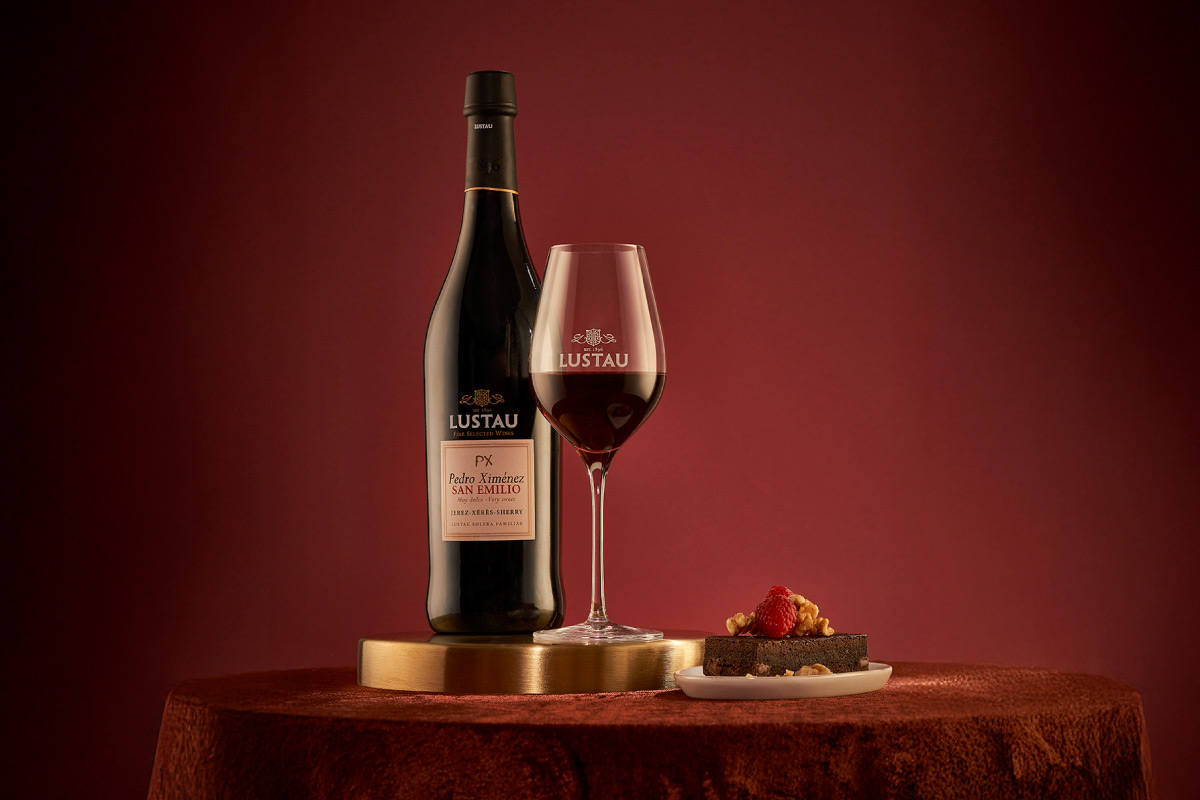
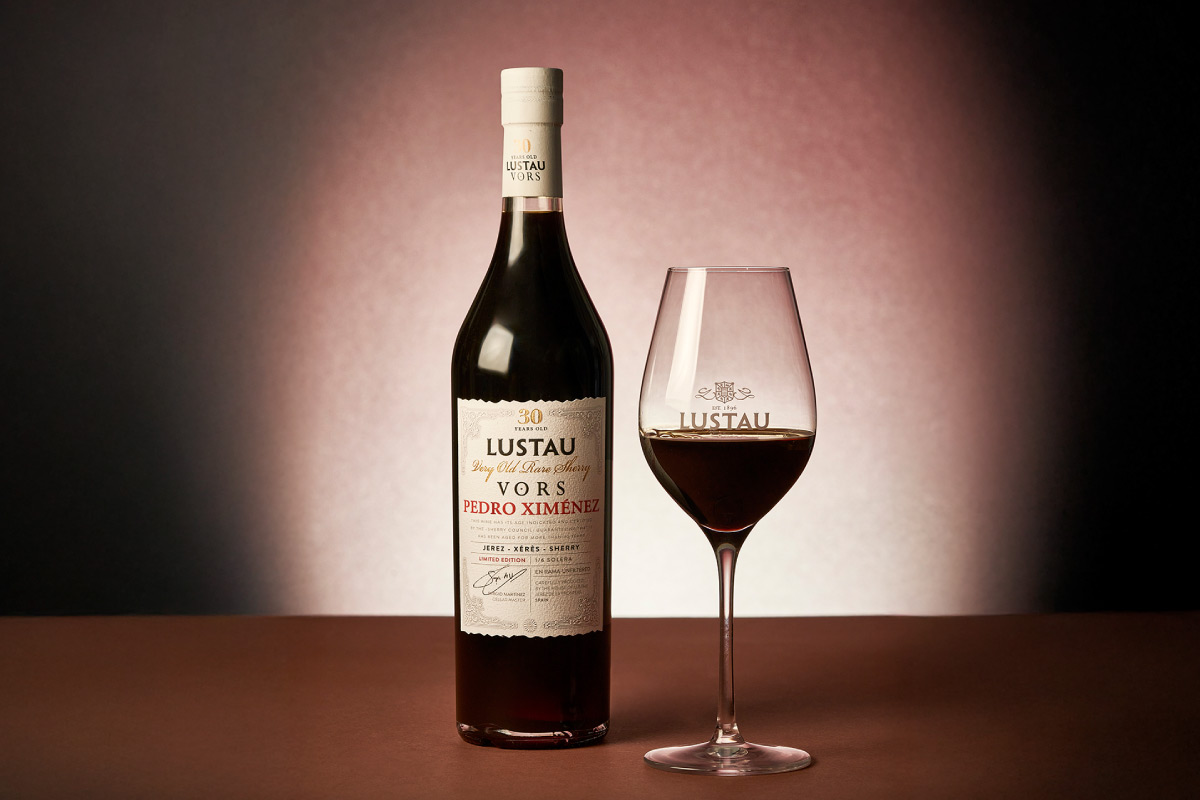
PX wines produced through sun drying typically display deep mahogany color and intense aromas of ripe/ dehydrated fruit, coffee, liquorice. Extraordinary velvety and silky textures. The density of the wine is almost syrup-like, coating the glass with thick tears.
Natural Sweetness and Balance
Despite their richness, PX wines maintain an outstanding balance through a very high acidity and structure developed during long periods of aging in the solera and criadera system. The wines may display a very intense sweetness, yet they rarely feel cloying when properly made. Instead, they offer a layered sensory experience that includes:
– Dried fruit aromas: raisins, figs, dates, plum,
– Roasted notes: smoked wood, coconut, coffee bean, brewed coffee.
– Caramel and chocolate tones: liquorice, dark chocolate, butterscotch
– Long, lingering sweetness with roasted nuances
Learn more about Sherry Wines With The CSWS® Program
For professionals and enthusiasts interested in understanding the full range of sherry production methods, the Certified Sherry Wine Specialist (CSWS®) program provides a deeper exploration of the region’s wines.The course covers topics such as:
– grape varieties of the Marco de Jerez
– vineyard practices and exploration of both sherry’s terroirs
– the solera aging system and other aging methods
Understanding asoleo is a key part of that story. It is a reminder that sometimes the most powerful winemaking tools remain the simplest ones: sunlight, time, and the quiet transformation of grapes under the sky.