







Sherry is often described through casks, “flor”, or solera systems, but long before a wine enters the cask, its identity begins in the vineyard. In Jerez terroir is not a vague idea. It is a real and impactful combination of climate, soil, topography, grape variety, and human expertise.
To understand sherry wine as a whole entity, it is also key to observe what is the actual role of terroir, even within the same region. The diversity of vineyard sites across the region will play a fundamental role in defining regional diversity.
For Lustau, grape growing based on vineyard diversity is not simply part of production logistics. It is the first of the foundations of the house style. Through estates such as Montegilillo and Las Cruces, Lustau works with opposite environmental conditions, soils, and grape varieties to shape a broad and expressive portfolio of wines rooted in origin and natural terroir.
Understanding vineyard diversity in Sherry wine
The concept of “sherry terroir” begins with the singular geography of the Marco de Jerez and also the vast and complex crafting process of sherry wines. It is important to identify two types of terroir in the region: the classic concept of vineyard terroir that reigns in the wine world (soil, altitude, sun exposure, vine grafting, rainfall, etc.) and the urban terroir, which gathers a myriad of elements that affect the wine only when it starts the aging process. Together they bring about outstanding and unparalleled sherry identity.
Why terroir matters in the wines of Jerez
Sherry wine terroir beckons looking beyond the cellar and focusing on the environmental conditions that define the region’s viticultural identity. Conditions that are shaped by a highly specific interaction between climate, geology, topography, and grape variety.
Located in southwestern Andalucía, between the Atlantic Ocean and the Guadalquivir River basin, Jerez experiences a warm Mediterranean climate with strong Atlantic influence. Annual rainfall is concentrated mainly between autumn and spring, while summers are intensely dry, with high temperatures. UOrography and exposure are also important players in the region’s viticulture. The vineyards are often located on rolling hills with variation in altitude, where slopes improve drainage and airflow. Vineyards exposed to levante winds tend to produce more concentrated fruit under hotter conditions, while poniente-facing sites benefit from cooler Atlantic humidity and slower ripening.
Get familiar with poniente and levante winds here:
Under these conditions, water management in the vineyard becomes critical, making soil composition one of the most important jerez vineyard characteristics. And this is where the famous albariza soil becomes critical. Formed from ancient marine sediments rich in diatoms and fossilized algae, albariza is a highly porous white soil capable of storing winter rainfall and gradually releasing moisture throughout the growing season. Different subtypes, such as “tosca cerrada” or “barajuelas”, influence drainage, vigour, and grape concentration in distinct ways.
These major conditions directly affect varietal expression. Palomino thrives in the chalk-rich inland soils thanks to its drought resistance and balanced growth, while moscatel performs especially well in the sandy coastal vineyards near Chipiona.
Together, climate, soil, altitude, orientation, and grape variety define the complexity of sherry vineyard terroir, making Jerez one of the most distinctive wine regions in the world.
Jerez Superior and vineyard classification
Traditionally, the finest vineyard sites of the region have been grouped under the concept of Jerez Superior. These vineyards are predominantly located on elevated areas with high concentrations of albariza soils, where the combination of altitude, slope, drainage, and moisture retention creates optimal conditions for quality viticulture. This is no longer the case as current regulations opted to expand the area granting the Jerez Superior certification of strict quality standards that guarantee a stronger presence of diversity and variation in terroirs to the whole region.
Historically, “pagos” such as Macharnudo, Carrascal, Añina, or Montegil have been associated with some of the most prestigious sites in the region due to their ability to produce grapes with character, freshness, and aging potential. These zones tend to sit on rolling hills exposed to Atlantic influence while benefiting from excellent sun exposure and natural drainage.
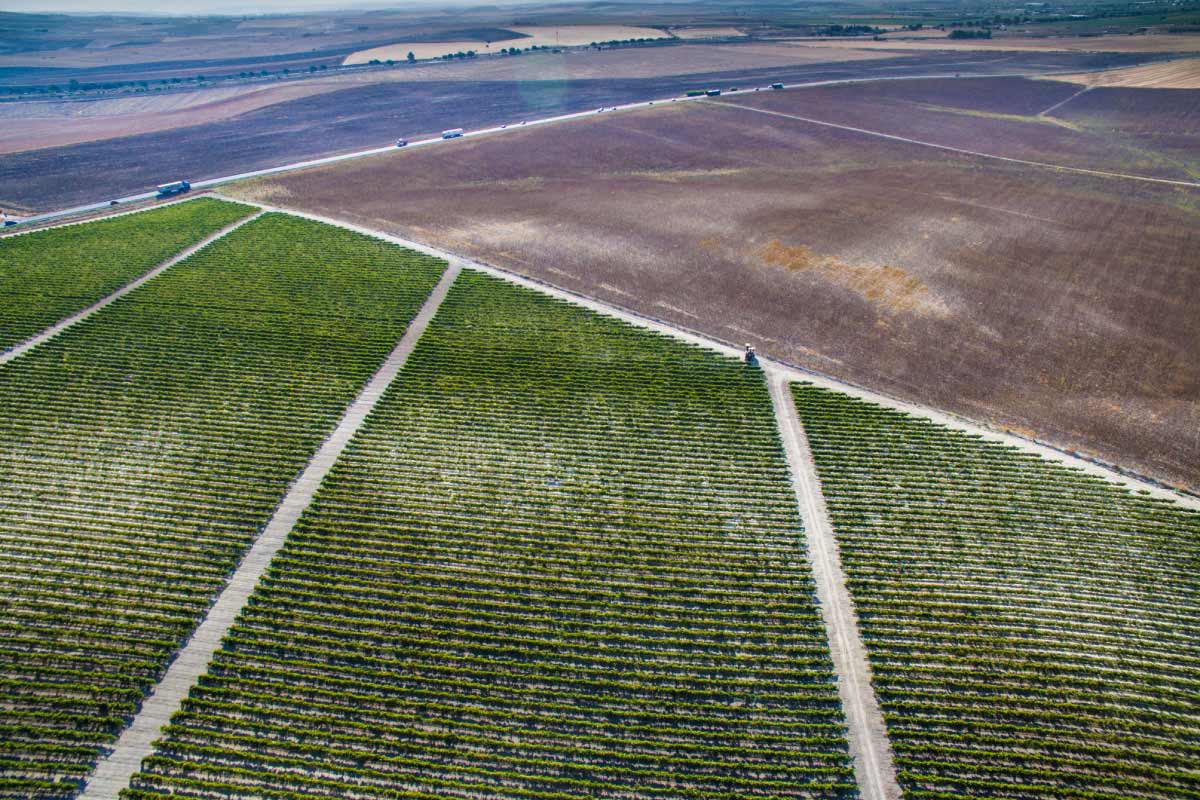
A pago is a historically recognized vineyard district within the Sherry region (Marco de Jerez), defined by a similar set of soil types, microclimates, topography, and geological features that give its grapes a distinct character.
The classification is closely linked to the concept of sherry vineyard terroir, where subtle differences in soil composition, orientation, and microclimate can significantly influence grape behavior and final wine style.
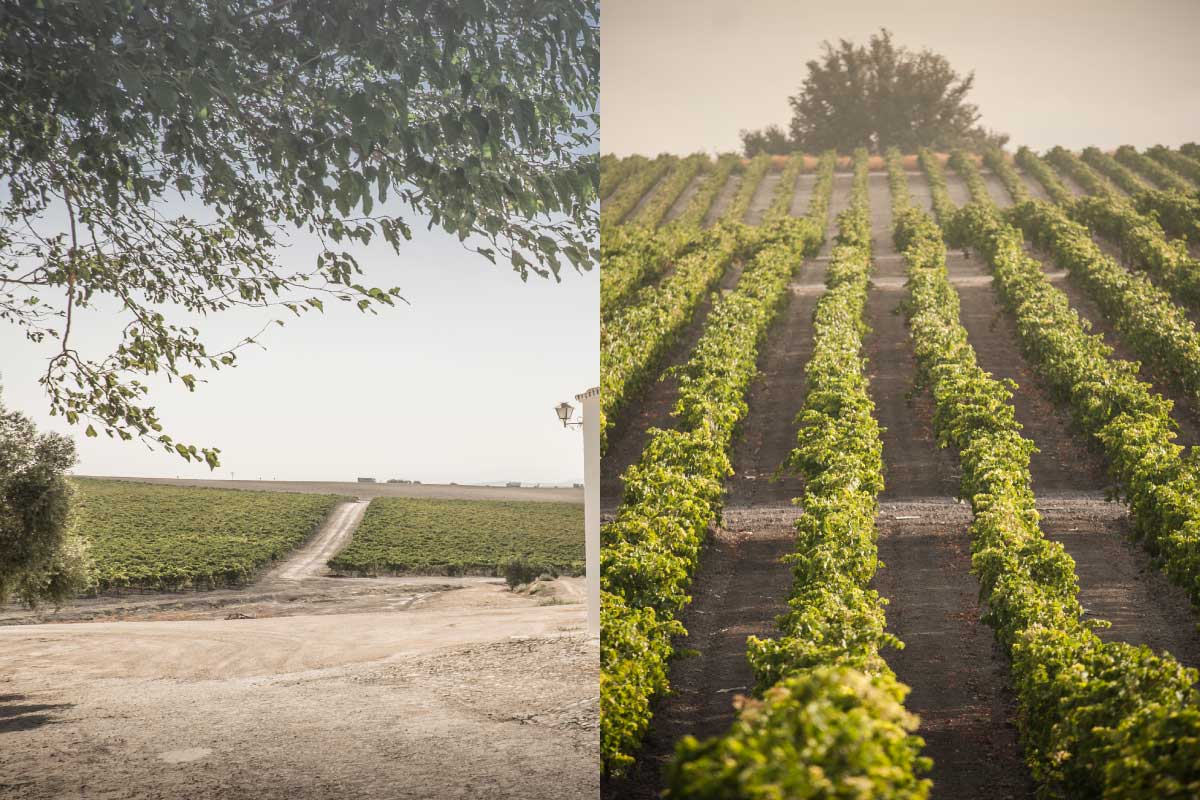
Within this context, Lustau’s vineyards represent two very different but complementary expressions of the region: the inland albariza-driven profile of Montegilillo and the coastal diversity of Las Cruces.
Exploring the unique character of each Lustau vineyard
The role of estate vineyards within Lustau’s production
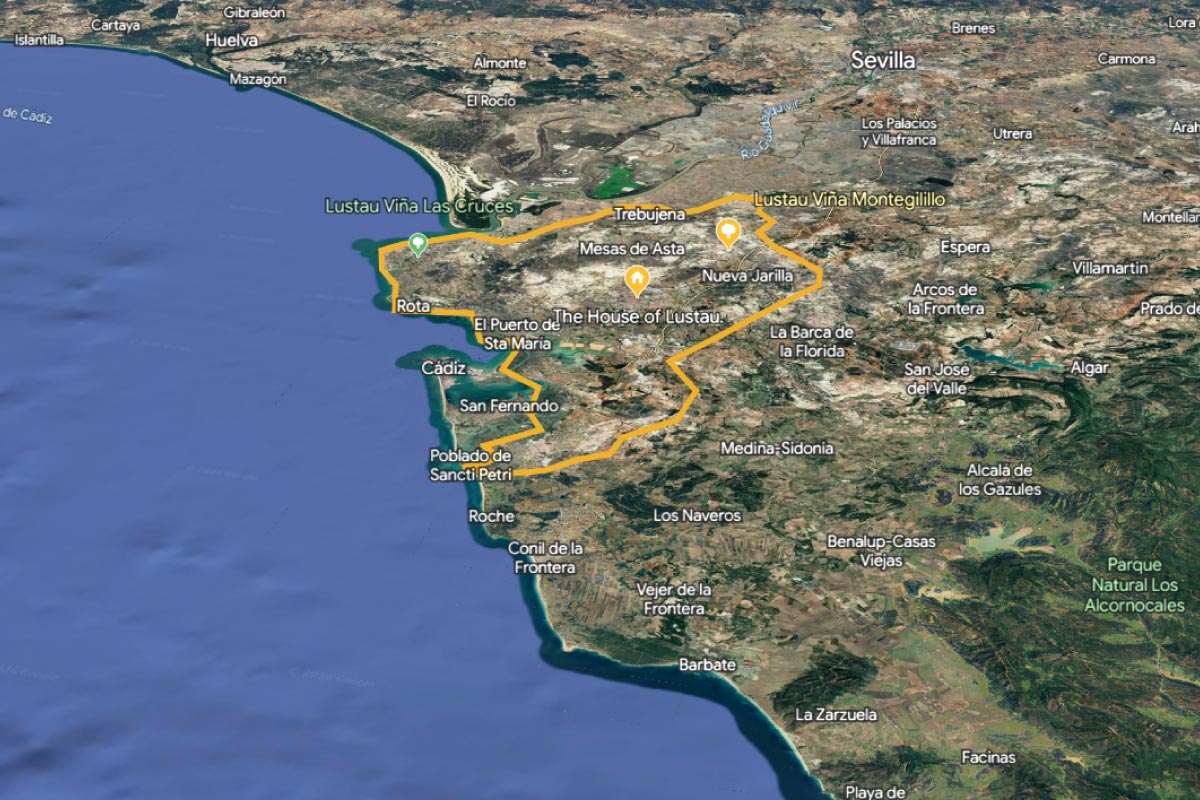
Among the many vineyards in Jerez, Lustau’s estates represent two very different interpretations of the region. Montegilillo, located inland near the pago Montegil, north of Jerez, focuses primarily on palomino fino grown on albariza soils.
On the other hand, Las Cruces, located near Chipiona (pago Abulagar) and very close to the Atlantic coast, offers probably the most complete combination of grape varieties and soil types.
Together, these estates illustrate how terroir diversity strengthens both viticulture and winemaking. Rather than pursuing uniformity, Lustau here embraces contrast and variety.
How different vineyards contribute to a diverse wine portfolio
The legacy of the Lustau collection lies precisely in this diversity, which applies from the beginning and the last step of the crafting process. Vineyards also play this role undoubtedly.
Montegilillo contributes structure, freshness, consistency, and classic bold palomino character suitable for biologically aged wines and classic dry styles. Las Cruces contributes aromatic intensity, richness, and broader stylistic possibilities thanks to its varied grape plantings and coastal conditions.
Rather than treating vineyards as interchangeable sources of fruit, Lustau works with each estate according to its natural strengths. This approach allows the house to preserve individuality while maintaining stylistic balance across its portfolio.
Exploring the unique character of each Lustau vineyard
Location, climate, and soil: defining each finca
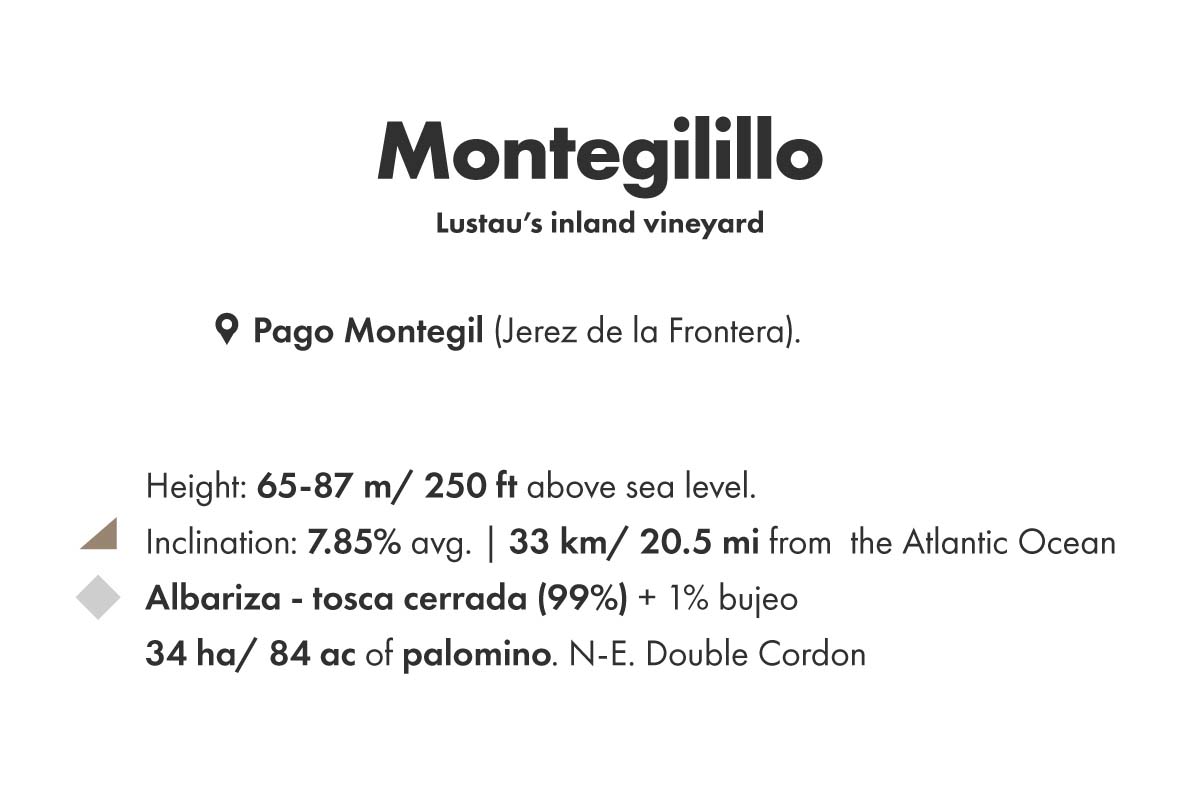
Montegilillo is planted entirely with palomino fino and sits at elevations between 65 and 87 meters (213 – 285 ft) above sea level. Much of the vineyard lies above the traditionally prized 45-meter contour associated with high-quality viticulture in Jerez. The vineyard’s soils are particularly important: The higher sections contain abundant “tosca cerrada”, a compact form of albariza with excellent moisture retention. Lower areas show more interaction with a minor presence of bujeo (clay) soils, creating subtle variation throughout the estate.
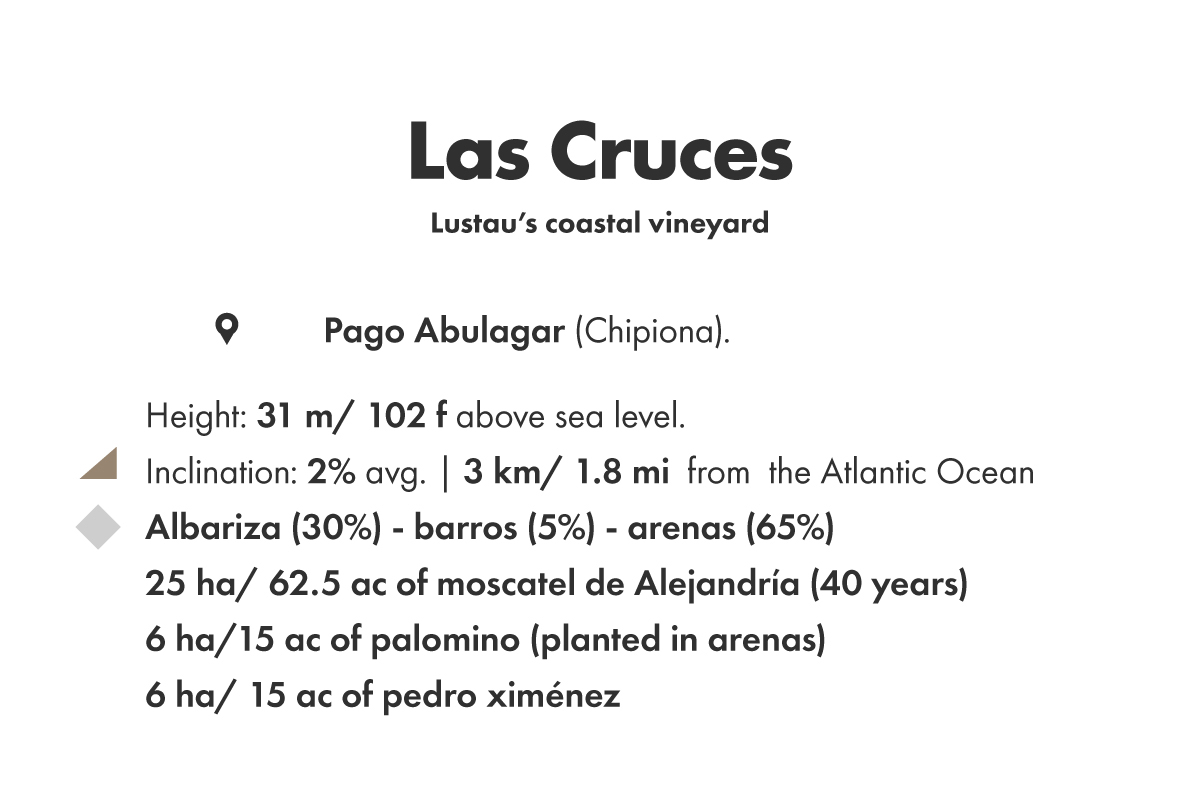
Las Cruces presents a radically different environment. Very moderate slopes, coastal proximity, and sandy soils dominate much of the estate. Also, by comparison, sits less than three kilometers (1.9 mi) from the Atlantic at a lower altitude. The vineyard includes moscatel, PX, and palomino planted across sandy soils, albariza zones, and clay-rich barros. The result is a much more heterogeneous vineyard environment with strong Atlantic influence.
Get a virtual tour of both Lustau’s vineyards: Google Earth Project.
Open in Google Earth
How each vineyard influences grape quality and expression
The relationship between vineyard and grape expression becomes especially clear when comparing varieties.
The palomino grape story is often misunderstood because this variety itself has been considered relatively neutral aromatically. Yet this neutrality leads to versatility and adaptability allowing terroir to become visible and noticeable. In Montegilillo, palomino expresses freshness, balance, and structure shaped by albariza soils and inland conditions.
At Las Cruces, palomino behaves differently. Sandy soils and coastal influence produce a rarer expression of the variety, one less associated with traditional inland albariza profiles: subtle fruity notes, less structure and more delicacy.
Moscatel, meanwhile, reaches an extraordinary expression at Las Cruces. The combination of thick-skinned berries and warm sandy soils creates grapes capable of handling intense heat and raisining while maintaining aromatic definition. This vineyard has become particularly respected for this Moscatel-sand relationship within the region.
Contrasts and complementarities between the vineyards
Differences in terroir and their impact on wine styles
The major contrast between Montegilillo and Las Cruces demonstrates clearly how terroir affects sherry wine.
– Montegilillo is fundamentally an inland vineyard with strong productive capacity and stable ripening conditions. Its combination of elevation, orientation, and albariza supports healthy fruit development with consistency across vintages.
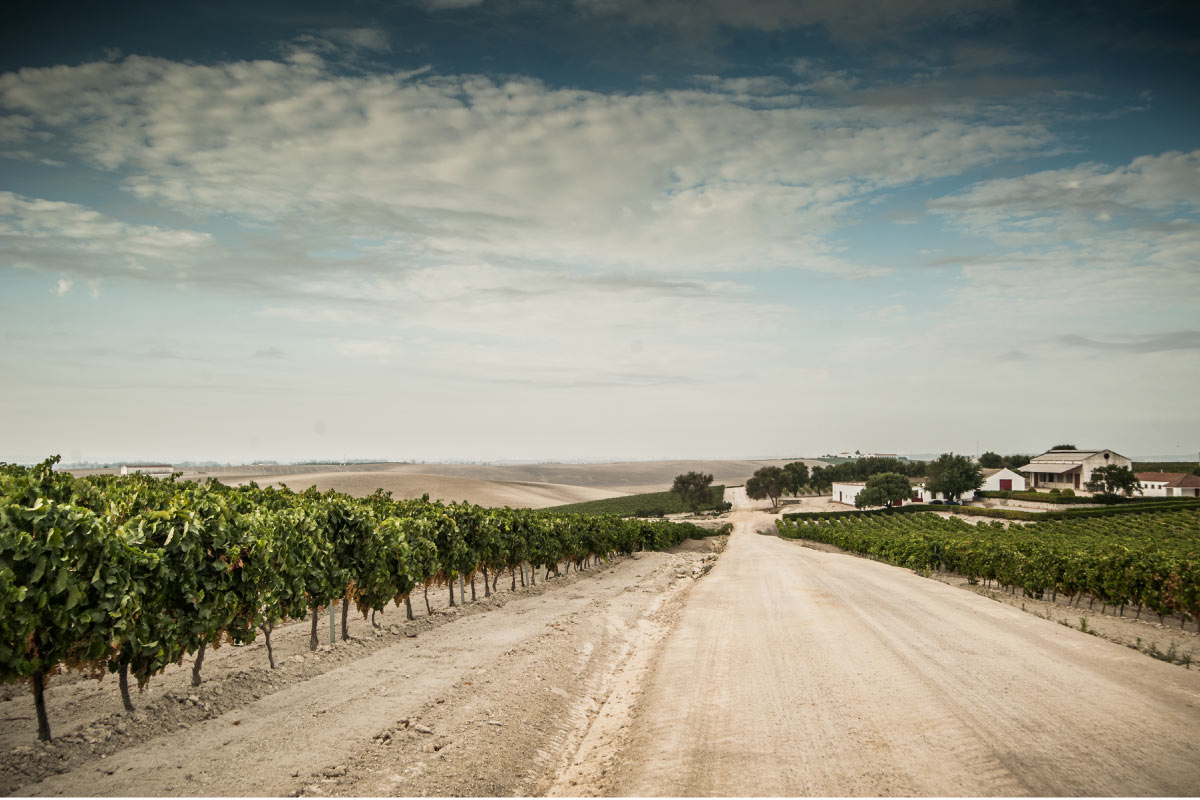
– Las Cruces behaves differently, particularly during dry years. Its coastal influence and sandy soils create resilience under heat stress while favouring aromatic varieties such as moscatel and pedro ximénez plus promoting a more subtle, delicate, fruitier side of palomino.
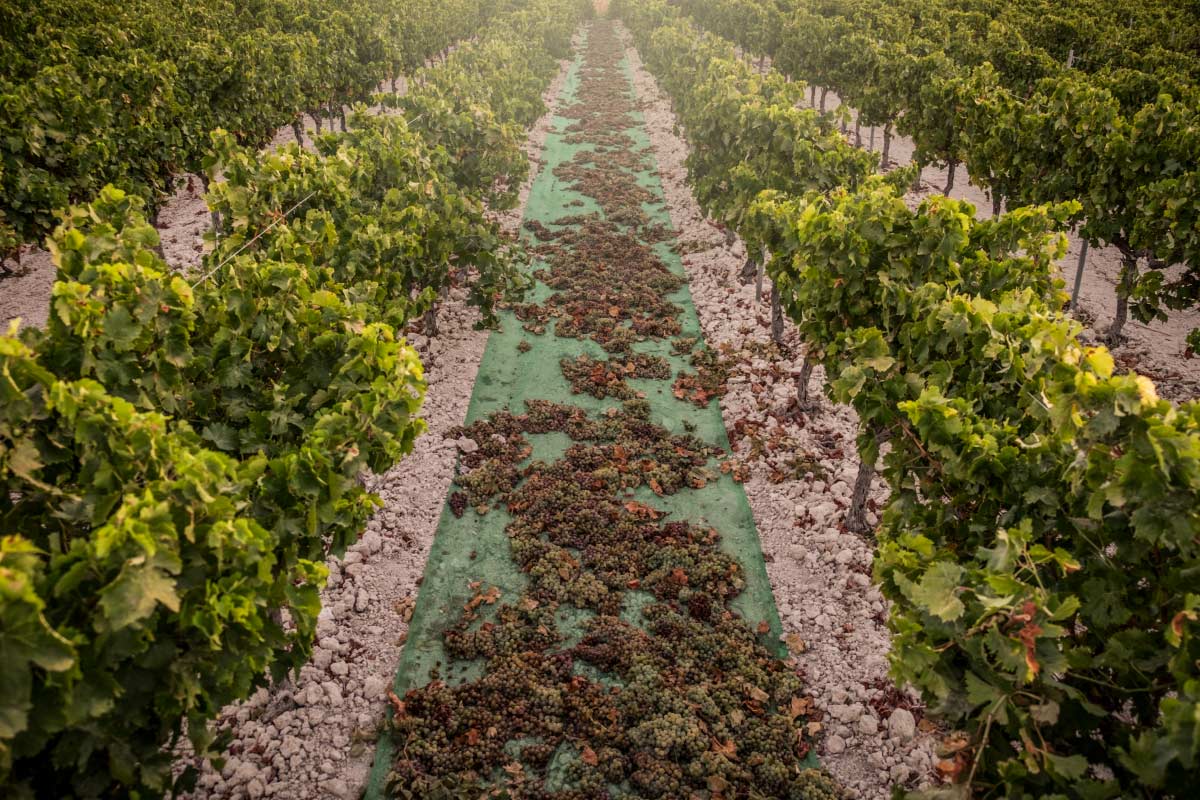
How diversity in the vineyard translates into diversity in the glass
This vineyard diversity allows Lustau to work across multiple concepts within the sherry and vermouth spectrum. The collection ranges from delicate biologically aged wines to impactful VORS expressions, vintage wines, single casks, and highly specialized limited editions. Each category asks for different profiles from the vineyard level before aging even begins.
In this sense, terroir is not simply a background element within Lustau’s identity. It is the first pillar that allows it to move naturally between freshness and concentration, coastal salinity and inland structure, biological and oxidative aging, or dry and sweet expressions reinforcing coherence as a house style.
The result is a collection that does not present sherry as one singular wine style, but as an entire landscape of possibilities shaped by origin.
Connecting origin, aging, and final expression
Sherry wines are unique because their identity depends on both vineyard origin and aging system (or urban terroir as a broader concept). Neither element works independently.
The vineyard determines fruit structure, concentration, and balance, then is transformed through “flor” development, cellar orientation/architecture or how long the wine is aged. Understanding the wine origin therefore means understanding both stages together. For example, a biologically aged wine from high-quality inland definitely behaves differently during aging than a wine from warmer or sandier conditions. The vineyard influences how the wine evolves over time inside the solera system and a specific result in personality and profile.
Why vineyard diversity is key for defining Lustau’s identity
A commitment to authenticity, origin, and craftsmanship
Lustau’s approach to viticulture reflects a broader commitment to authenticity and regional identity. This includes attention not only to soils and grape varieties, but also to vineyard management itself. The role of skilled viticulture appears repeatedly throughout the vineyard reports because terroir alone is never enough. Soil and climate create potential, but human expertise determines whether that potential becomes reality.
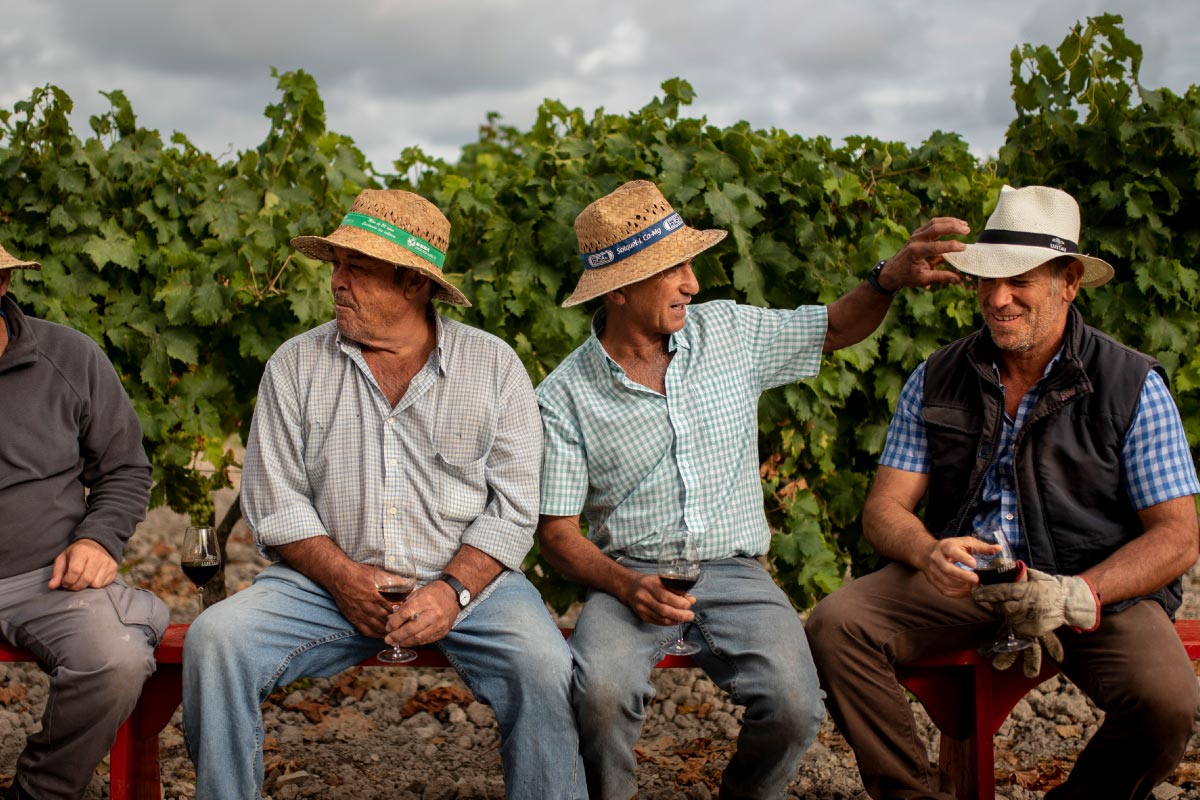
– At Montegilillo, vineyard work focuses on maximizing balance and consistency in palomino fino through controlled training systems, moderate yields, and careful adaptation to the albariza soils and inland climate.
– Las Cruces, meanwhile, requires a more diverse viticultural approach due to the coexistence of moscatel, pedro ximénez, and palomino across sandy soils, albariza, and barros.
The technical management of the vineyards also reflects long-term thinking. At Las Cruces, for example, palomino vines were reintroduced through over-grafting onto existing red grapevine rootstocks instead of replanting entirely, allowing the vineyard to preserve the maturity and established root systems of older vines.
This attention to detail extends to the collaboration between viticultural teams and technical advisors, who continuously evaluate vine behavior, yields, climatic conditions, and grape quality throughout the growing cycle.
Behind every bottle there is a network of decisions taken months before harvest begins.
Reinforcing brand values through diversity and complexity
Lustau’s identity has long been anchored in the celebration of diversity, complexity, and origin‑driven authenticity. Montegilillo and Las Cruces vineyards illustrate how these values can be reflected through a clear, terroir‑focused narrative grounded in real viticultural differences across the region.
By foregrounding the contrast between inland albariza‑driven precision and coastal aromatic expressiveness, Lustau can strengthen its philosophy: sherry is not a monolith but a landscape of distinct profiles, expressions and voices. What makes Lustau’s vineyards unique is the combination of contrasting terroirs within the Marco de Jerez. Highlighting these vineyard differences supports a portfolio narrative built on place, craft, and authentic complexity through Lustau’s lens.