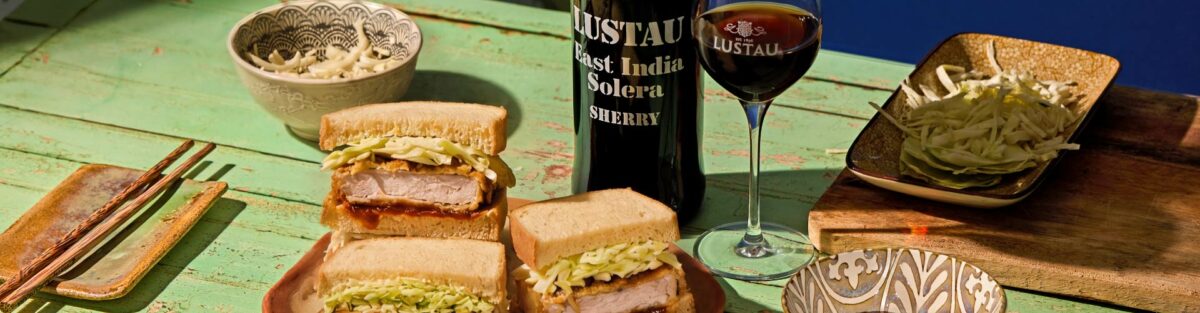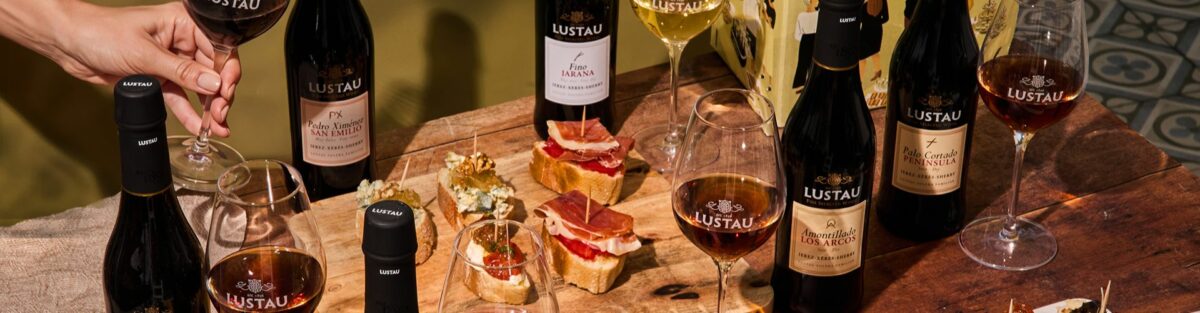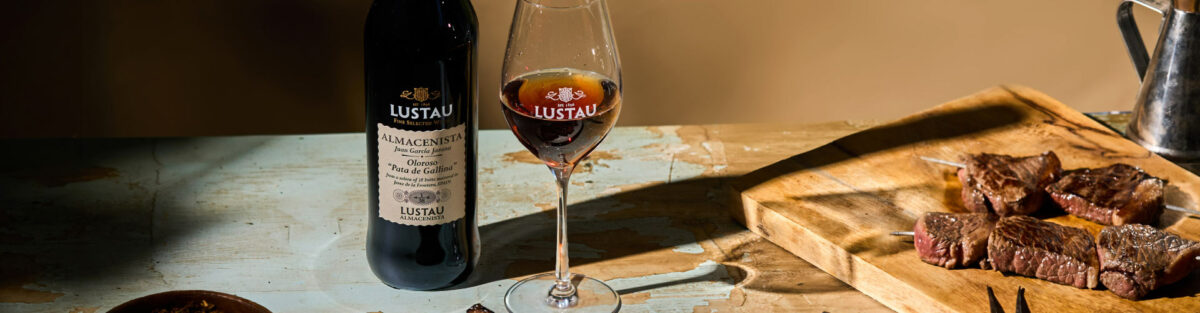






Some dishes invite wine, and others almost seem to demand it. Greek gyros belong firmly to the latter. Warm, aromatic, and layered with contrasts—charred meat, cool tzatziki, salty cheese, and fresh herbs—they create a dynamic interplay of flavors that calls for a wine capable of matching both their energy and their depth.
This is where Lustau Almacenista José Luis González Obregón Amontillado del Puerto finds its place with remarkable precision. A wine shaped first by “flor” and then by oxygen, it carries within it both freshness and quiet intensity. When brought to the table alongside gyros, the pairing does not simply work—it unfolds each element of the dish illuminating a different facet of the wine. In this Mediterranean dialogue, structure becomes the common language: salinity, acidity, and savory depth moving in harmony across plate and glass.
WHAT ARE GREEK GYROS?
Greek gyros are among the most recognizable expressions of Mediterranean street food, yet their simplicity hides a remarkable sophistication. Built around seasoned meat, wrapped in warm pita, and layered with fresh and creamy components, they deliver a complete culinary experience in a single bite.
What makes gyros and sherry pairings so compelling lies in their layered structure is their balance: richness without heaviness, freshness without fragility, and seasoning that enhances rather than overwhelms.
THE ORIGINS OF GYROS IN GREEK CUISINE
The word gyros—meaning “turn” in Greek—refers to the traditional method of cooking meat on a vertical rotisserie. While its roots are connected to broader Eastern Mediterranean traditions, gyros have become a defining staple of Greek culinary identity.
Over time, what began as a method of cooking evolved into a cultural symbol: a dish that is an everyday staple and one that is deeply expressive of place Whether served in bustling city streets or seaside tavernas, gyros carry with them the warmth, generosity, and convivial spirit of Greek dining.
WHY THEIR SAVORY MEAT, HERBS, AND CREAMY TZATZIKI MAKE THEM IDEAL FOR PAIRING
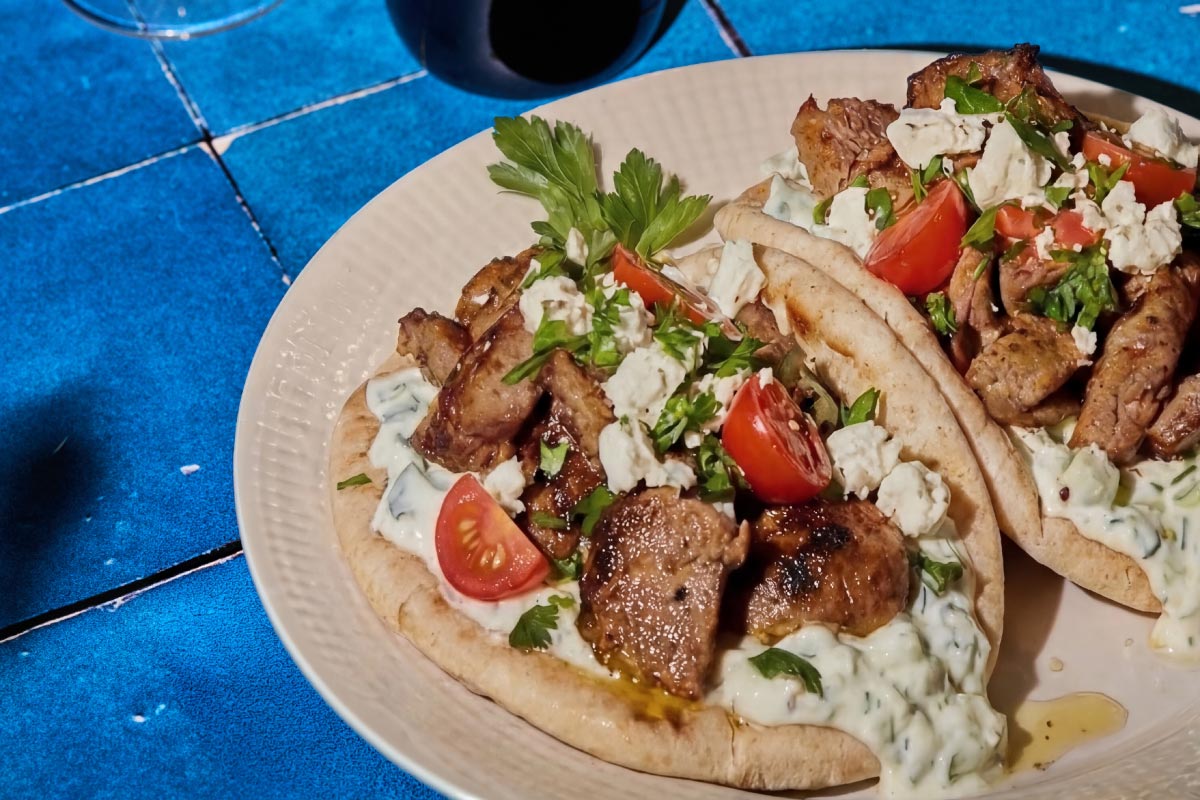
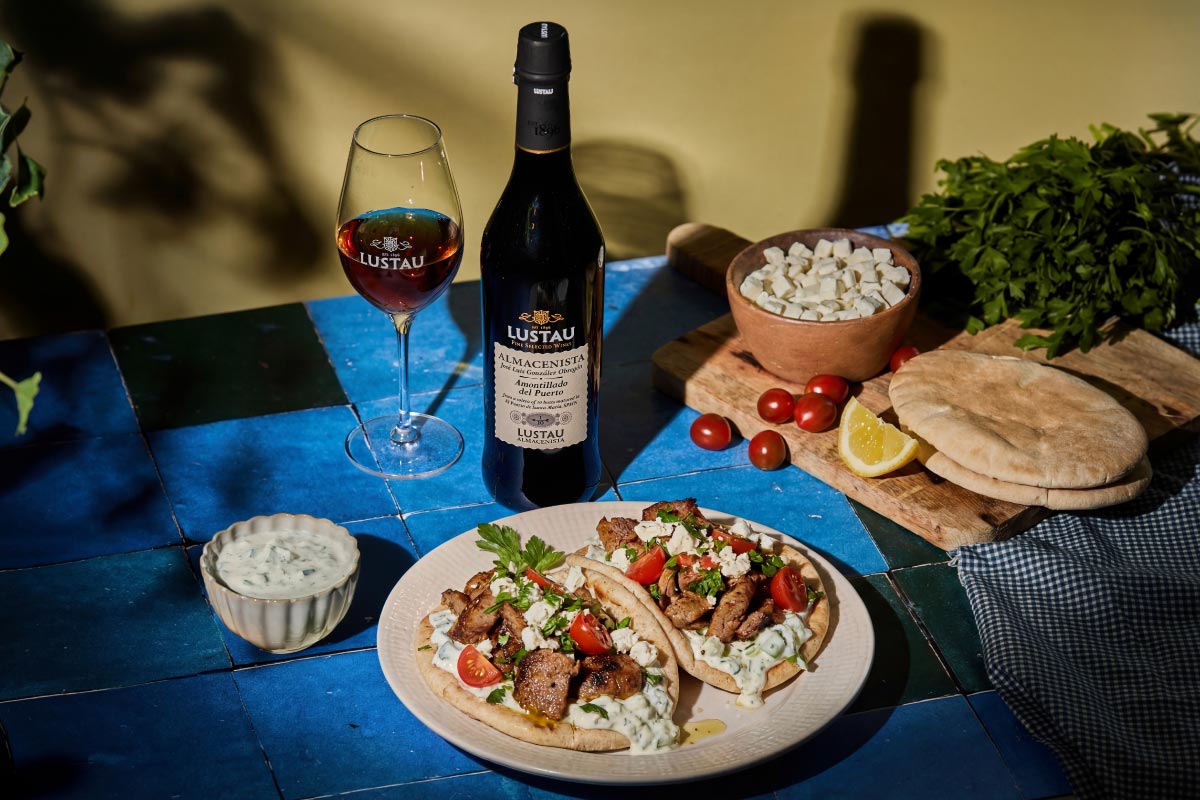
What makes gyros and sherry pairing so compelling in their layered structure. The meat—often pork or lamb—is richly seasoned and lightly caramelized, bringing savory depth and subtle smokiness. Tzatziki introduces a cooling element, with yogurt, cucumber, and herbs adding acidity and lift. Fresh components like tomatoes and parsley provide brightness, while feta contributes a distinct saline edge.
This combination creates a dish that moves constantly between richness and freshness. It is precisely this interplay that makes gyros an ideal partner for amontillado: a wine that itself bridges two worlds—biological finesse and oxidative complexity.
WHY LUSTAU ALMACENISTA AMONTILLADO DEL PUERTO IS THE PERFECT PAIRING FOR GREEK GYROS
Not all sherries meet gyros with the same ease. Some emphasize freshness but lack depth; others bring richness but risk overwhelming the dish. Lustau Almacenista Amontillado del Puerto occupies a rare and compelling middle ground.
Born under “flor” in the coastal humidity of El Puerto de Santa María, and later shaped by oxidative aging, this wine carries a dual identity. It begins with delicacy—notes of wax, sea breeze, and almond—before unfolding into something more profound: toasted hazelnut, light caramelization, and a gentle, savory warmth. This duality is precisely what allows it to echo so naturally with gyros.
Insert: Learn everything you know about amontillado here:
The lightly charred edges of the meat accentuate the wine’s oxidative depth, creating a bridge between plate and glass. At the same time, the saline imprint of El Puerto aligns seamlessly with the crumble of feta, amplifying that subtle, mouthwatering tension that defines the pairing. Yet what truly elevates this pairing is the wine’s ability to refresh without retreating. Its acidity and dryness cut through the creaminess of tzatziki, while its structure remains firm enough to carry the full spectrum of flavors. In this sense, the pairing is not about contrast alone, nor about similarity. It is about continuity.
HOW GREEK GYROS ARE TRADITIONALLY PREPARED
Behind the apparent simplicity of gyros lies a careful orchestration of technique and balance. Each component plays a defined role, and the success of the dish depends on how these elements come together in harmony. From the slow roasting of the meat to the freshness of the garnishes, gyros are built on contrasts—temperature, texture, and flavor—all working in concert.
KEY INGREDIENTS IN AUTHENTIC GYROS: MEAT, PITA, AND TZATZIKI
At the heart of gyros is the meat, traditionally cooked on a vertical spit, where it slowly rotates and develops layers of flavor. As the exterior caramelizes, thin slices are shaved off, capturing both tenderness and crispness in each portion.
The pita, warm and slightly blistered, acts as both structure and texture. Its soft interior contrasts with lightly toasted edges, offering a subtle resonance of the meat’s char while providing a neutral canvas for the filling.
Tzatziki, made from strained yogurt, cucumber, garlic, and herbs, introduces a cooling dimension. It brings not only creaminess but also a gentle acidity that lifts the entire composition.
THE ROLE OF SEASONING, TEXTURE, AND BALANCE IN THE FINAL DISH
Seasoning is assertive but never aggressive. The spices enhance the natural savoriness of the meat without masking it. Texture plays an equally important role: the contrast between crisp edges, soft bread, creamy sauce, and fresh garnishes creates a dynamic eating experience. Balance is the final and most important element: richness is always countered by freshness; roundness lifted by acidity; salinity sharpens and defines each bite.
THE PERFECT SERVE: HOW TO ENJOY GREEK GYROS WITH LUSTAU AMONTILLADO DEL PUERTO
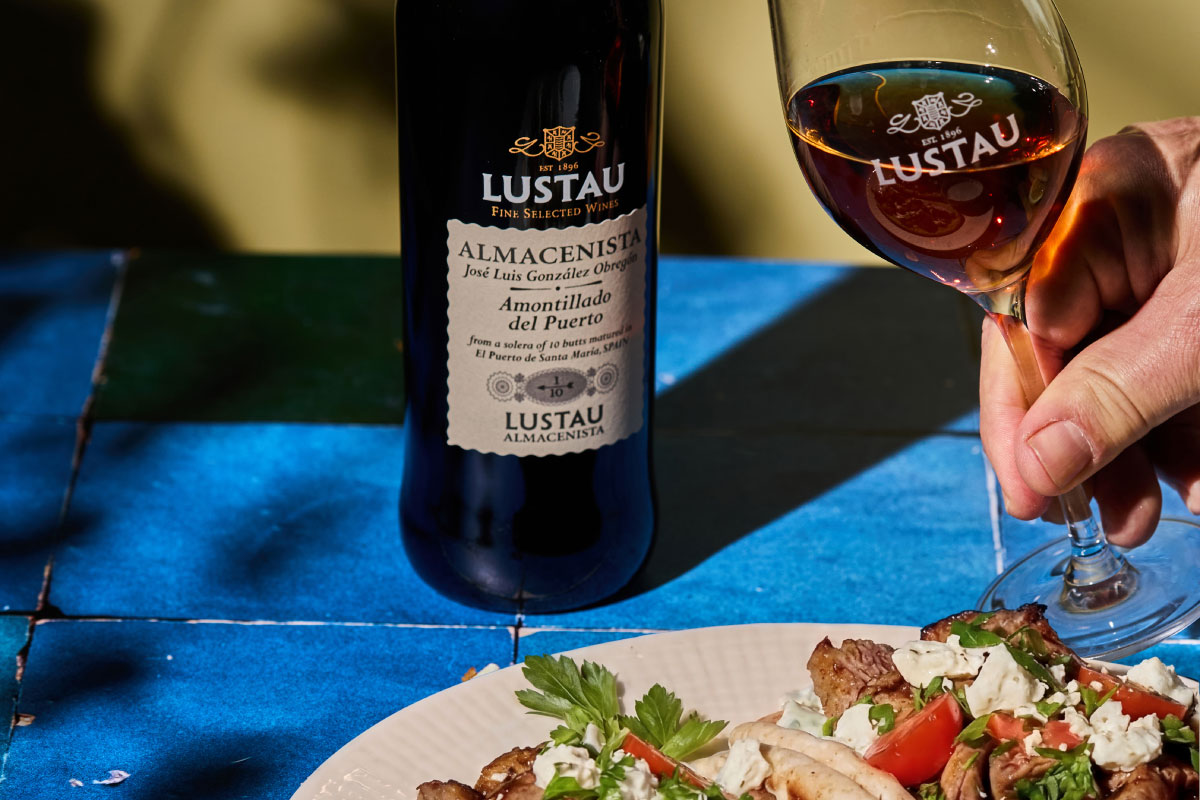
Lustau Almacenista Amontillado del Puerto shows best when lightly chilled, around 12–14°C (54–57°F). At this temperature, its freshness remains vivid, while its deeper, oxidative notes unfold gradually with each sip. Too cold, and the wine tightens; too warm, and it risks losing its precision. Serve it in a white wine glass rather than a traditional copita. The wider bowl allows the wine’s aromatic layers—almond, dried herbs, a subtle saline breeze—to open and evolve, creating a more complete sensory experience.
On the plate, the gyros should be warm, with the meat freshly carved or reheated just enough to preserve its caramelized edges. The tzatziki should remain cool, the herbs vibrant, and the tomatoes freshly cut. This contrast in temperature mirrors the structural tension of the wine itself.
Take a bite first—allow the textures and flavors to settle—then follow with a sip of amontillado. Notice how the wine gathers the elements of the dish, refining them, extending them, and preparing the palate for the next bite. This is the essence of a great gyros and amontillado pairing: a continuous, effortless rhythm between food and wine.
WHEN TO SERVE GREEK GYROS WITH AMONTILLADO SHERRY
One of the great strengths of this pairing is its versatility. It belongs as comfortably to a casual meal as it does to a more curated dining experience, adapting naturally to different moments and settings.
Casual Lunch and Mediterranean Dining
Few pairings feel as intuitive as gyros and sherry wine on a relaxed afternoon. Whether enjoyed at home or as part of a Mediterranean-inspired spread, this combination offers both satisfaction and freshness. The wine elevates the dish without complicating it, making it ideal for moments when ease and quality go hand in hand.
Outdoor Gatherings and Informal Meals
There is something inherently outdoor-friendly about this pairing. The brightness of the dish, the refreshing yet structured nature of the wine, and the ease of serving gyros make it perfect for terraces, gardens, or seaside settings. The amontillado’s saline character feels particularly at home in open air, where it seems to merge with the environment itself.
Street Food and Elevated Pairing Experiences
Gyros may be rooted in street food culture, but their structure allows them to transcend it. Paired with Lustau Almacenista Amontillado del Puerto , the dish takes on a new dimension. What is often perceived as simple becomes layered and expressive, revealing nuances that might otherwise go unnoticed. This is where the pairing becomes a statement: that great wine does not belong exclusively to formal settings, and that everyday dishes can reach extraordinary heights when matched with intention.
FREQUENTLY ASKED QUESTIONS ABOUT GYROS AND SHERRY PAIRINGS
Why Does Amontillado Pair Well with Greek Gyros?
Amontillado works so well with gyros because it mirrors the dish’s structure.
Its oxidative notes resonate with the caramelized meat, while its dryness and acidity cut through the richness of tzatziki. At the same time, its saline character enhances ingredients like feta and fresh herbs, creating a cohesive and balanced experience.
Can Other Styles of Sherry Pair with Gyros?
Yes, though each will highlight different aspects of the dish. A fino or manzanilla will emphasize freshness and salinity, offering a lighter, more delicate pairing. An oloroso, on the other hand, will deepen the experience, accentuating the savory and spiced elements of the meat. However, amontillado remains uniquely positioned between these styles, combining freshness and depth in a way that aligns most completely with the dish.
How Should Lustau Amontillado del Puerto Be Served for the Best Experience?
For the Lustau Almacenista Amontillado del Puerto perfect serve, focus on three elements: temperature, glassware, and freshness. Serve the wine lightly chilled (12–14°C / 54–57°F) in a white wine glass to allow its aromatics to develop fully. Once opened, keep the bottle refrigerated and enjoy it over the following days to preserve its vibrancy.
Discover the perfect tips for a perfect sherry pour:
Above all, serve it alongside food. Amontillado reveals its true character at the table, where its structure, complexity, and balance come fully into focus.