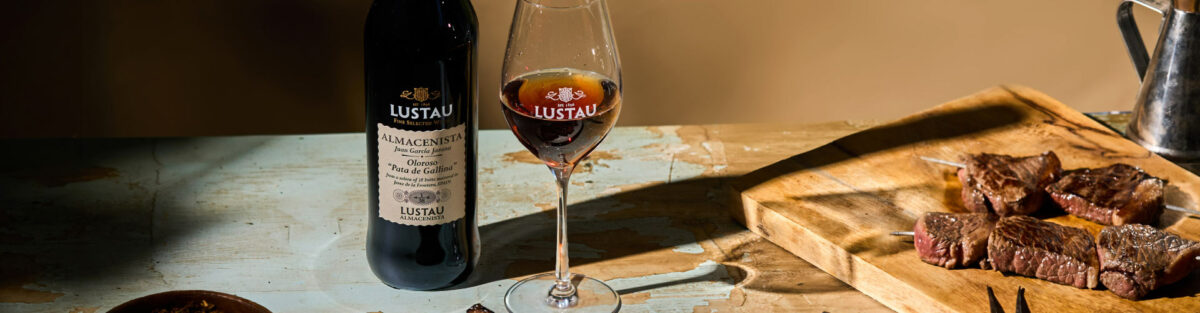






There are few meat experiences as satisfying as properly cooked picanha. The combination of deep beef flavor, rendered fat, coarse salt, and open-fire caramelization creates a style of grilling that feels both primal and refined at the same time. Every element of the dish is built around concentration: savory richness, texture, smoke, and juiciness.
These same qualities are precisely what make picanha such a compelling partner for oloroso sherry.
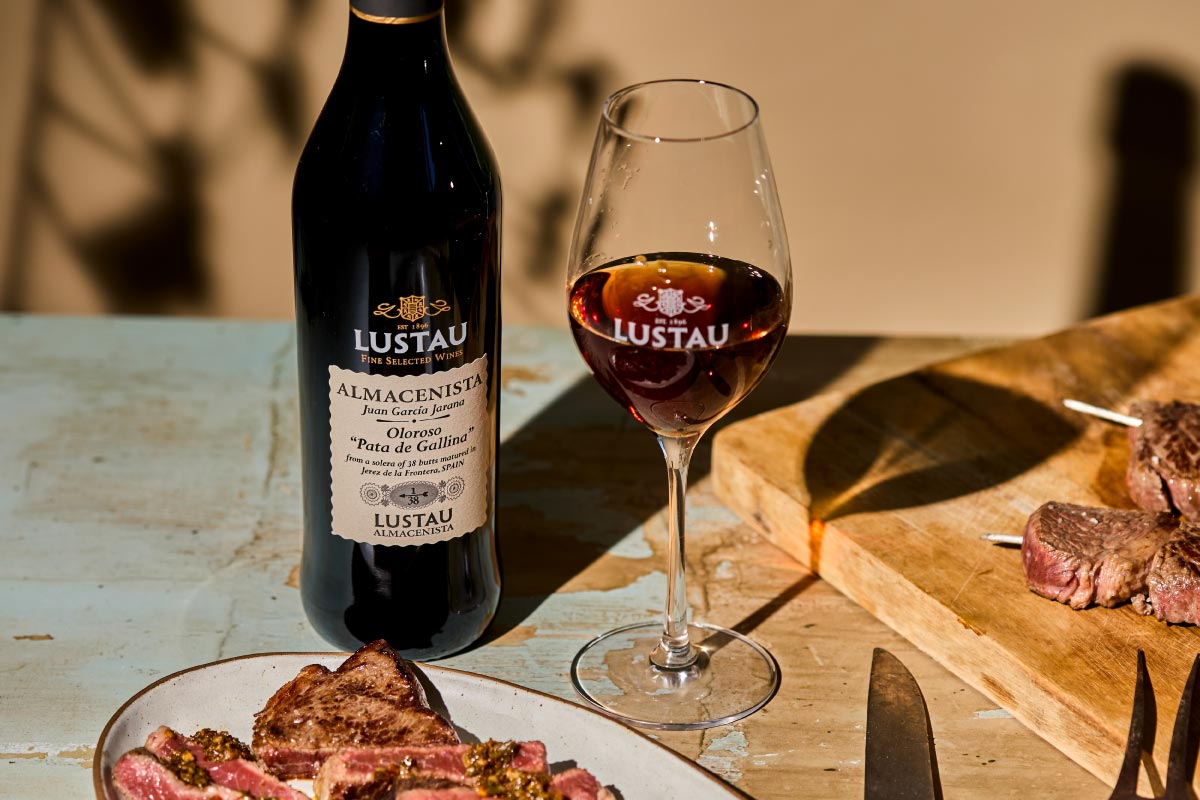
Unlike many traditional red wine pairings, Lustau Oloroso Pata de Gallina approaches grilled meat from a different angle. Rather than relying on tannin and fruit, it brings oxidative depth, roasted nut complexity, dryness, and savory intensity—qualities that naturally echo the charred crust and richness of the beef while maintaining enough tension to refresh the palate.
In this picanha wine pairing, the goal is not contrast alone, but resonance. The wine mirrors the depth created by fire and fat, while its structure keeps the experience balanced and dynamic from the first bite to the last.
What Is Picanha?
Picanha is one of the most iconic cuts in Brazilian cuisine, particularly within the tradition of “churrasco”. Recognized by its characteristic fat cap and triangular shape, it is prized for its balance of tenderness, juiciness, and concentrated beef flavor.
Unlike heavily marbled cuts that rely primarily on intramuscular fat, picanha develops much of its character through the interaction between fire and its exterior layer of fat. As the meat cooks, the fat slowly renders, basting the beef naturally while encouraging the formation of a deeply caramelized crust.
This combination of richness, smoke, salt, and texture is what gives picanha its unmistakable identity—and what makes it such a compelling candidate for sherry wine with steak pairing.
The Origins of Picanha in Brazilian Cuisine
Picanha is deeply connected to the culture of Brazilian churrasco, where grilling over open flame is treated not simply as a cooking method, but as a social ritual. Traditionally cooked on large skewers over wood or charcoal fire, the cut is seasoned with little more than coarse salt, allowing the quality of the beef and the effects of fire to remain at the center of the experience.
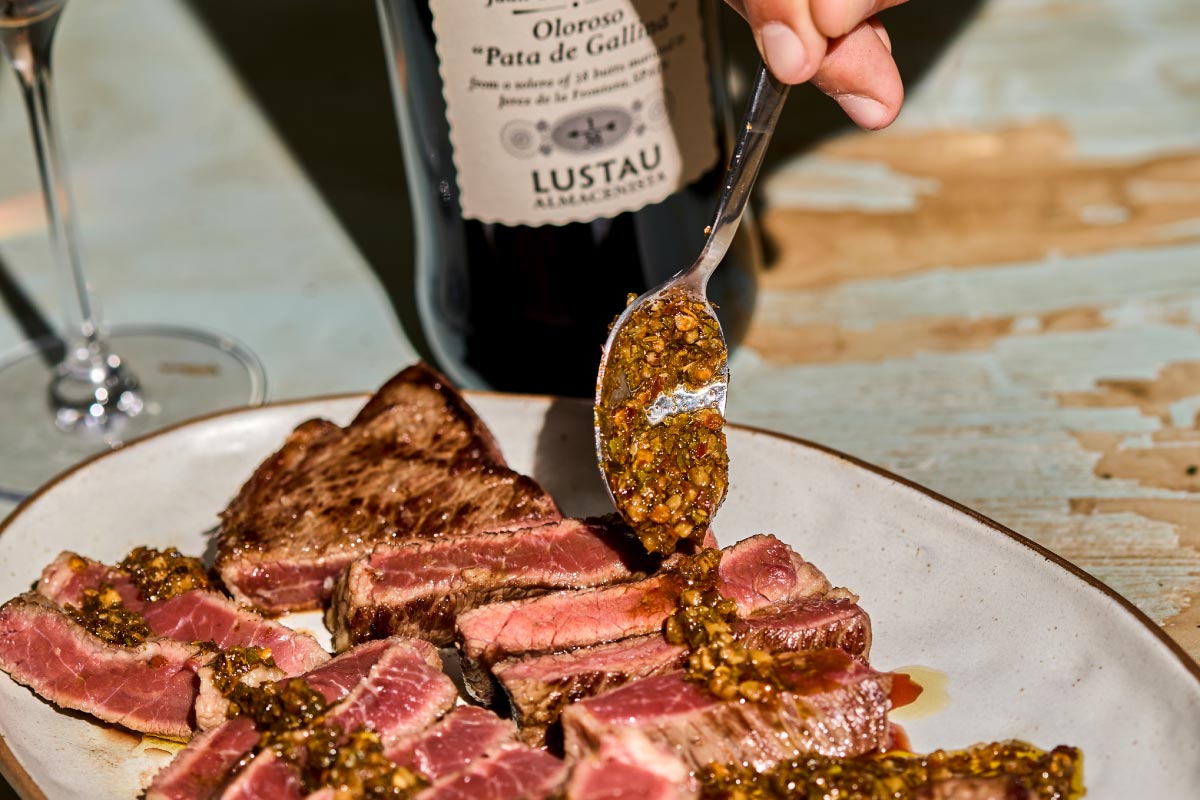
Its popularity spread through steakhouses and churrascarias across Brazil before gaining international recognition, particularly among chefs and grilling enthusiasts drawn to its distinctive texture and flavor.
Today, picanha has become one of the defining expressions of South American live-fire cooking—an approach built around simplicity, precision, and respect for the ingredient itself.
Why Its Rich Flavor, Fat Cap, and Juiciness Make It Ideal for Pairing
Picanha’s appeal lies in balance.
The rendered fat cap brings richness and succulence, while the charred exterior introduces bitterness, smoke, and savory concentration. At the same time, the interior remains juicy and tender, creating contrast between crust and flesh in every bite.
These layers make the cut particularly versatile in pairing terms. The fat softens structure, the char amplifies roasted flavors, and the salt heightens both savoriness and aromatic intensity.
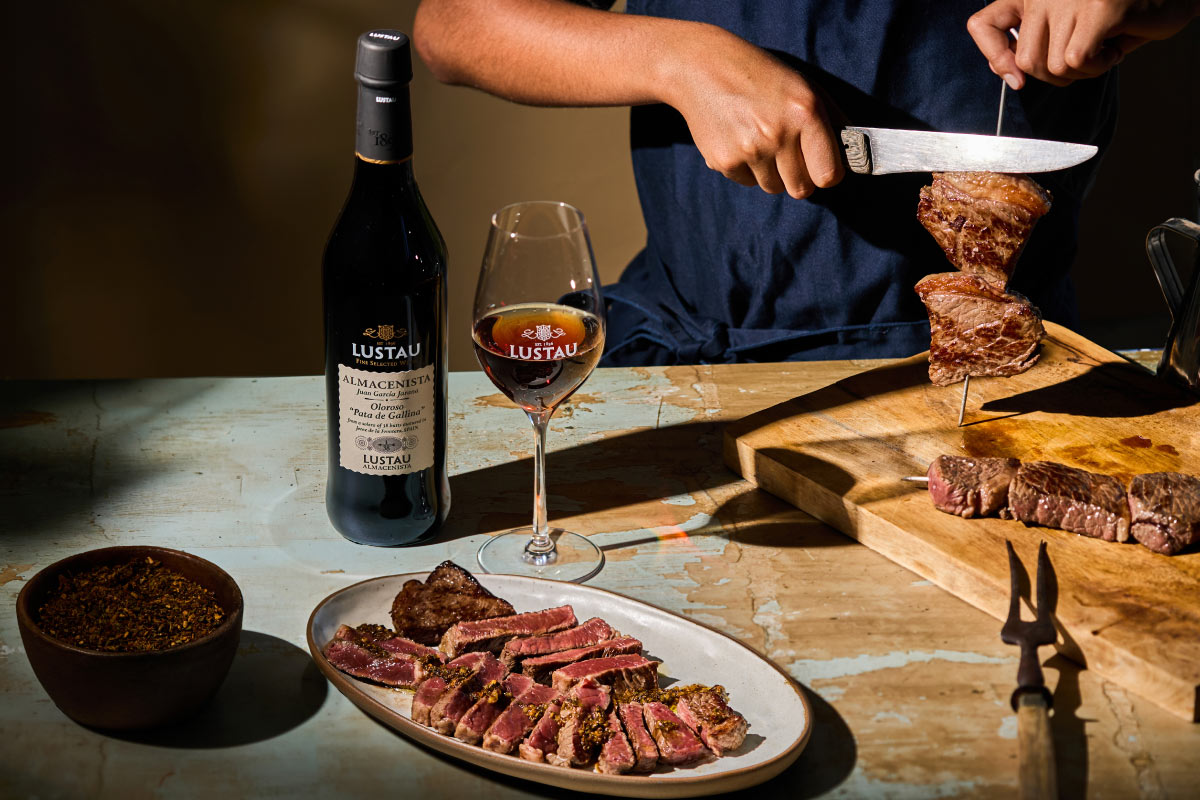
This is precisely why oloroso sherry with this particular beef cut works so effectively. Lustau Oloroso Pata de Gallina possesses the depth and oxidative complexity necessary to engage with the intensity of grilled meat, while its dryness prevents the pairing from becoming heavy or fatiguing.
Why Lustau Oloroso Pata de Gallina Is the Perfect Pairing for Picanha
Few wines engage with grilled beef as naturally as oloroso sherry.
Lustau Oloroso Pata de Gallina brings together many of the same elements that define a great piece of picanha: roasted depth, savory concentration, texture, and persistence. Its long oxidative aging develops notes of walnut, toasted wood, leather, spice, and caramelized nuts—flavors that resonate directly with the charred crust created by high-heat grilling.
At the same time, the wine’s structure interacts beautifully with the rendered fat of the cut. Unlike heavily tannic red wines, which can sometimes amplify dryness alongside char and salt, oloroso approaches richness differently. Its glycerol texture wraps around the meat, while its dryness and oxidative tension cleanse the palate without stripping it.
This dynamic becomes especially compelling when the fat cap has been properly rendered. The caramelized exterior of the beef echoes the wine’s oxidative character, while the juicy interior keeps the pairing vibrant and balanced.
Even the supporting elements of the dish contribute to the harmony. Coarse salt sharpens the wine’s savory profile, while chimichurri introduces herbal brightness and acidity that help frame the richness without distracting from it.
What makes this oloroso sherry food pairing so successful is not a single flavor match, but the way both wine and dish evolve together across the palate—moving between power, freshness, smoke, and savory depth in a continuous progression.
You can take a look to other prominent pairings with Oloroso Pata de Gallina:
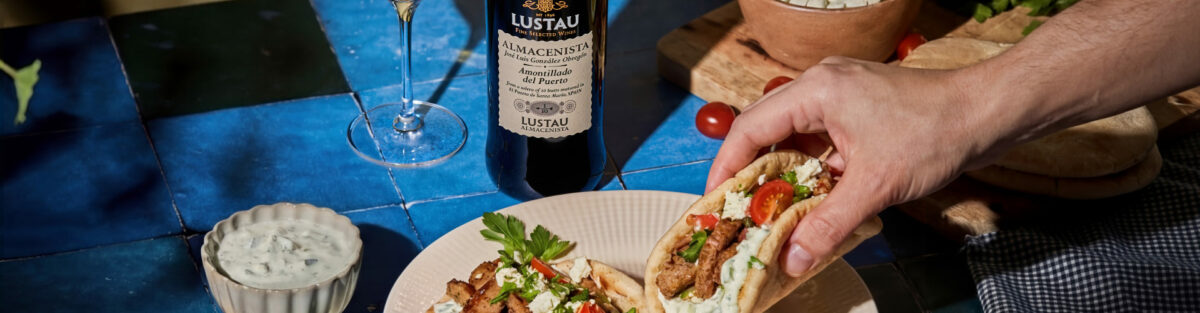
The lightly charred edges of the meat accentuate the wine’s oxidative depth, creating a bridge between plate and glass. At the same time, the saline imprint of El Puerto aligns seamlessly with the crumble of feta, amplifying that subtle, mouthwatering tension that defines the pairing. Yet what truly elevates this pairing is the wine’s ability to refresh without retreating. Its acidity and dryness cut through the creaminess of tzatziki, while its structure remains firm enough to carry the full spectrum of flavors. In this sense, the pairing is not about contrast alone, nor about similarity. It is about continuity.
How Picanha Is Traditionally Prepared
Picanha is often celebrated for its simplicity, but achieving the ideal result requires precision. The quality of the cut, the management of fire, and the careful rendering of the fat cap all play a central role in defining the final experience.
Traditional preparation relies on restraint. Rather than masking the beef with heavy marinades or excessive seasoning, the goal is to highlight the natural flavor of the meat and the transformative effect of live fire.
This approach creates a style of cooking where texture and concentration become just as important as flavor itself—one of the reasons brazilian picanha food pairing works so naturally with oxidative styles of sherry.
Key Elements of Authentic Picanha: Cut, Salt, and Fire
Authentic picanha begins with the cut itself. The defining feature is the exterior fat cap, which should remain intact during cooking. As heat is applied, the fat slowly renders, protecting the meat while contributing richness, texture, and flavor.
Seasoning is intentionally minimal. Coarse salt is traditionally the only addition, enhancing savoriness without competing with the character of the beef.
Fire, however, is the true defining element.
Whether grilled over charcoal or open wood flame, picanha depends on intense heat to develop its characteristic crust. This caramelized exterior introduces bitterness, smoke, and roasted complexity—qualities that form the foundation of the pairing with oloroso sherry.
The Role of Fat, Texture, and Grilling Technique in the Final Result
The success of picanha depends largely on balance.
If the fat cap is under-rendered, the cut can feel heavy. If overcooked, it loses the juiciness that gives the dish its contrast and energy. Proper grilling creates tension between crisp exterior fat, charred crust, and tender interior flesh.
This textural interplay is essential to the experience. Each bite moves between richness and freshness, concentration and lift.
High-heat grilling also intensifies umami and savory depth through caramelization, allowing the beef to develop flavors that naturally resonate with the oxidative character of Lustau Oloroso Pata de Gallina.
In many ways, the pairing succeeds because both the wine and the dish are shaped by transformation—fire in the case of the meat, oxygen and time in the case of the sherry.
Discover the interaction between sherry wines and umami here:
The Perfect Serve: How to Enjoy Picanha with Lustau Oloroso Pata de Gallina
Serving temperature and presentation play an important role in bringing this pairing fully into focus.
Lustau Oloroso Pata de Gallina should be served slightly cool, around 12–14°C (54–57°F). At this temperature, the wine maintains freshness and precision while allowing its oxidative complexity and texture to unfold gradually in the glass.
A white wine glass works particularly well, giving the wine enough space to express its layered aromas without concentrating alcohol excessively.
Picanha, meanwhile, should arrive freshly sliced, with the rendered fat cap still warm and glossy from the grill. A light finishing touch of flaky sea salt can sharpen both the savory qualities of the meat and the nutty depth of the wine.
If chimichurri is included, restraint is essential. Rather than covering the beef entirely, it should function as a supporting element—bringing herbal lift and acidity that frame the richness without overwhelming the char and concentration that define the pairing.
This is what makes what to drink with grilled picanha such an interesting question. The pairing succeeds not through sheer intensity, but through balance: smoke against oxidation, fat against dryness, richness against tension.
When to Serve Picanha with Oloroso Sherry
Picanha and oloroso naturally lend themselves to occasions built around sharing, conversation, and slow enjoyment.
The combination of grilled meat, open fire, and oxidative sherry wine creates a style of pairing that feels generous and deeply convivial—substantial enough for celebratory meals, yet relaxed enough for informal gatherings.
Unlike more delicate wine pairings that demand careful attention, this combination feels instinctive and grounded, allowing both food and wine to evolve comfortably over the course of a long meal.
Weekend Meals and Social Dining
Picanha is inherently social. It is a dish designed for carving, sharing, and eating slowly around the table. Served alongside simple accompaniments and good conversation, it creates an atmosphere where both food and wine can be appreciated without formality.
Oloroso supports this rhythm beautifully. Its depth and persistence allow it to remain expressive throughout the meal, while its dryness keeps the experience energetic rather than heavy.
Premium Meat Experiences and Elevated Pairings
As interest in premium beef and live-fire cooking continues to grow, pairings beyond traditional red wines are becoming increasingly compelling.
Oloroso offers an alternative approach—one built less around tannin and fruit, and more around savory depth, oxidative complexity, and textural harmony. This makes it especially effective with cuts like picanha, where rendered fat, char, and concentration define the experience.
For those exploring fortified wine with grilled meat, Lustau Oloroso Pata de Gallina demonstrates how sherry can elevate serious meat pairings while offering something distinctive, nuanced, and deeply memorable.
BONUS! Other sherry wines to pair with red meat:
Frequently Asked Questions About Picanha and Sherry Pairings
Why Does Oloroso Pair Well with Picanha?
Oloroso pairs exceptionally well with picanha because both share a similar flavor language: roasted depth, savory concentration, and persistence. The oxidative character of the wine resonates with the charred crust created by high-heat grilling, while its dryness helps balance the richness of the rendered fat cap. Unlike heavily tannic red wines, oloroso refreshes the palate without amplifying dryness or bitterness.
Learn everything you know about oloroso below:
Can Other Styles of Sherry Pair with Grilled Meats?
Yes. While oloroso is particularly effective with richly marbled or heavily caramelized cuts, other styles of sherry can also work beautifully with grilled meats. Amontillado pairs well with roasted poultry and lighter grilled preparations, while palo cortado offers an elegant bridge between lift and oxidative depth. Even fino and manzanilla can succeed with grilled seafood or leaner cuts when salt and freshness play a larger role in the dish.
How Should Lustau Oloroso Pata de Gallina Be Served for the Best Experience?
Lustau Oloroso Pata de Gallina is best served slightly cool, around 12–14°C (54–57°F), in a white wine glass. This temperature allows the wine’s oxidative complexity, texture, and savory character to unfold gradually while maintaining freshness and precision. For the best experience, serve it alongside freshly sliced picanha with a well-rendered fat cap and pronounced grilled crust.