






There are few foods more iconic — or more misunderstood from a pairing perspective — than a slice of New York–style pizza. Folded in half, eaten standing up, its surface glistening with melted mozzarella and bright tomato sauce, it feels casual, almost too democratic to deserve serious wine consideration. And yet, beneath that apparent simplicity lies a layered composition of acidity, fat, fermentation, and gentle char — a structure that calls for something far more precise than the usual soda.
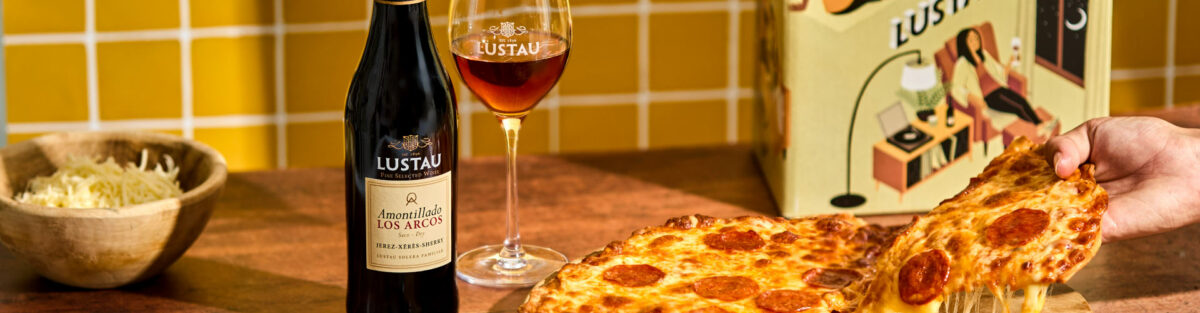
Enter Lustau Amontillado Los Arcos. With its dialogue between biological freshness and oxidative depth, amontillado brings tension, salinity, and umami resonance to the table. It does not compete with the richness of the cheese or the sweetness of the tomato; it frames them, sharpens them, and reveals the savory architecture of the slice. What might seem like an unexpected pairing quickly becomes inevitable — a meeting point between street food and centuries-old solera craftsmanship.
In this article, we explore why NYC-style pizza and Lustau Amontillado Los Arcos speak the same gastronomic language — and how to recreate the experience at home with intention.
WHAT IS NYC-STYLE PIZZA?
New York–style pizza is not simply a variation of Italian pizza; it is a culinary identity shaped by immigration, urban density, and adaptation. Born from Neapolitan roots in the late 19th and early 20th centuries, it evolved in the ovens of a growing metropolis, where practicality met flavor and speed met craftsmanship.
The crust is thin yet resilient, wide enough to be folded lengthwise without collapsing — a gesture that has become as emblematic as the slice itself. Unlike the soft, knife-and-fork delicacy of Neapolitan pizza, the New York slice was designed to be eaten on the move, sold by the slice, and supported by high-gluten flour that gives it its characteristic chew.
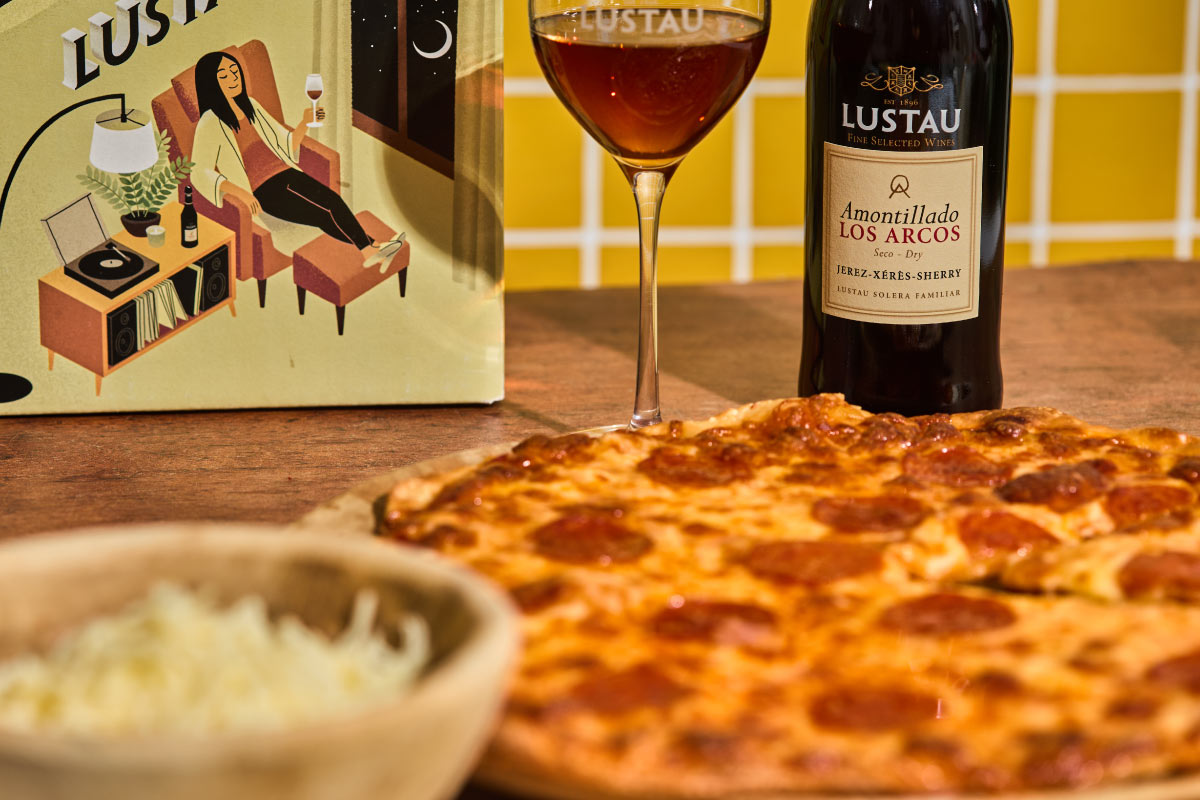
The tomato sauce is bright and rich, often lightly seasoned. The mozzarella — typically low-moisture rather than fresh buffalo — melts into a uniform, elastic layer that delivers richness without flooding the dough. Beneath it all lies a fermentation-driven base that brings subtle acidity and depth, amplified by the gentle char of a deck oven. It is a pizza of balance rather than excess — and that balance is precisely what makes it so compelling from a pairing perspective.
THE ORIGINS AND RISE OF NYC PIZZA
The story of New York–style pizza begins, as so many great American food stories do, with immigration. At the turn of the twentieth century, waves of Southern Italian families — many from Naples and Campania — arrived in New York carrying culinary memory more than written recipes. Flatbreads topped with tomato and cheese were already part of their daily life. What changed in New York was scale, heat, and audience.
In 1905, Gennaro Lombardi was granted what is often considered the first pizzeria license in the United States, baking pies in a coal-fired oven in Lower Manhattan. Coal, abundant and intensely hot, created a different crust expression: firmer at the base, lightly charred at the edges, structured enough to support generous toppings. As the city expanded and ovens evolved from coal to gas deck systems, the style stabilized into what we now recognize — large, wide pies, cut into broad slices, designed to be sold individually and eaten without ceremony.
Over time, toppings evolved to match American tastes. Cured meats like pepperoni — with their spiced flavors and crisped edges — added savory depth and richness. The result was a distinctly urban expression.
KEY INGREDIENTS IN AN AUTHENTIC NEW YORK SLICE
The dough begins with high-gluten flour, water, yeast, salt, and often a touch of sugar and oil. However, what defines it is fermentation and structure. A well-developed dough delivers elasticity, light chew, and a subtle tang that quietly underpins the entire slice.
The tomato sauce is typically made from crushed canned tomatoes — bright, slightly sweet, naturally acidic — seasoned sparingly with salt, oregano, and perhaps garlic. It must remain vivid enough to cut through melted cheese without overwhelming it.
Low-moisture mozzarella is essential. Unlike fresh buffalo mozzarella, it melts evenly, creating a cohesive, lightly elastic layer that binds sauce and crust. When baked at high heat, the cheese blisters gently, contributing delicate caramelized notes. And then come the toppings. Classic pepperoni, when exposed to deck-oven heat, curls and crisps at the edges, releasing spiced oils that mingle with the cheese. Combined with tomato acidity and toasted dough, creates the savory framework that makes the slice so compelling — and so interesting from a sherry pairing perspective.
WHY LUSTAU AMONTILLADO LOS ARCOS IS THE PERFECT MATCH FOR NYC-STYLE PIZZA
Pairing wine with pizza often defaults to red wine — something fruity, approachable, and familiar. But NYC-style pizza is not simply about tomato and cheese. Its structure calls for a wine that understands umami, that can navigate richness without heaviness, and that brings both tension and depth.
Lustau Amontillado Los Arcos offers precisely that balance. As an amontillado, it begins its life under “flor”, gaining sharpness and savory lift, before continuing its aging oxidatively in the solera system, where it develops nutty complexity and aromatic depth. The result is a dry wine with structure, persistence, and subtle salinity — qualities that resonate with the toasted crust, bright tomato, and molten mozzarella of a New York slice.
When pepperoni enters the equation, the logic becomes even clearer. The wine’s oxidative notes echo the caramelized edges of the cured meat, while its dryness and acidity cut through rendered richness. Rather than overwhelming the slice, Lustau Amontillado Los Arcos frames it, revealing layers that might otherwise go unnoticed.
WHAT IS THE BEST SHERRY TO PAIR WITH RICH, SAVORY DISHES?
When a dish leans into umami and toasted flavors — as NYC-style pizza does — the ideal wine is not one driven by fruit, but by structure. Rich, savory foods demand dryness to cleanse the palate, acidity to balance tomato brightness, and aromatic complexity capable of engaging caramelized cheese and cured meat.
Learn more about how umami works in wine pairings
Fino and manzanilla excel with delicacy and salinity, but when melted mozzarella and pepperoni oils enter the equation, greater depth is required. Oloroso offers oxidative power, yet can feel too broad for a tomato-driven base. Amontillado sits precisely in between.
Having begun its aging under “flor”, amontillado retains a lifted, savory backbone that resonates with fermented dough and cured toppings. Its subsequent oxidative aging adds toasted hazelnut, dried herb, and subtle spice notes that mirror the blistered crust and crisped pepperoni edges. The wine remains dry, yet texturally layered — capable of cutting through fat while amplifying umami. In dishes where richness meets acidity, amontillado often proves to be the most complete answer.
HOW TO MAKE NYC-STYLE PIZZA AT HOME
Essential Ingredients for the Dough and Sauce
The dough begins with high-gluten flour, water, yeast, salt, and a small amount of sugar and olive oil. High-gluten flour is key; it provides the chew and structural resilience that define a New York slice. Allowing the dough to ferment slowly — ideally 24 to 48 hours in the refrigerator — develops subtle acidity and aromatic depth that elevate the final result.
For the sauce, simplicity prevails. Use high-quality canned whole tomatoes, crushed by hand or lightly blended. Season sparingly with salt, dried oregano, and a touch of garlic if desired. The sauce should remain bright and slightly tangy, not heavily cooked or sweetened. Its acidity will balance the richness of the cheese and interact beautifully with the dryness of amontillado.
Low-moisture mozzarella is essential for proper melt and texture. Fresh mozzarella releases too much water and disrupts the structure.
Step-by-Step Guide to Crafting the Perfect Slice
After fermentation, bring the dough to room temperature and stretch it gently by hand into a wide, thin round. Avoid rolling pins; preserving internal air pockets contributes to a lighter crust. Transfer to a preheated baking steel or stone — as hot as your oven allows, ideally 500–550°F.
Spread a thin layer of sauce, leaving a narrow border for the crust. Add shredded low-moisture mozzarella evenly, avoiding excess. If using pepperoni, distribute slices so they crisp rather than overlap heavily. Bake until the crust is lightly blistered, the cheese melted and beginning to brown, and the pepperoni edges curl and caramelize.
Allow the pizza to rest briefly before slicing into wide wedges — foldable, but firm.
Tips for Elevating Your Pizza with Classic and Modern Toppings
Classic toppings like pepperoni, mushrooms, or Italian sausage deepen the savory profile and pair naturally with amontillado’s oxidative warmth. Cured meats, in particular, enhance the umami dialogue with the wine.
For a more modern expression, consider additions that introduce complexity without overwhelming structure: thinly sliced fennel, roasted red peppers, or even a light scattering of aged Parmigiano-Reggiano after baking. A drizzle of good olive oil or a touch of chili flakes can amplify spice resonance with the wine’s subtle dried-herb notes.
The key is balance. Each topping should support the crust and sauce rather than dominate them — just as the wine frames the slice without overpowering it.
PAIRING NYC PIZZA WITH AMONTILLADO LOS ARCOS: A STEP-BY-STEP GUIDE
Begin with temperature. Serve Lustau Amontillado Los Arcos slightly chilled, around 13–14°C (54–57°F). Too cold, and its aromatics tighten; too warm, and the alcohol becomes more noticeable. At the right range, its nutty, savory notes unfold with precision.
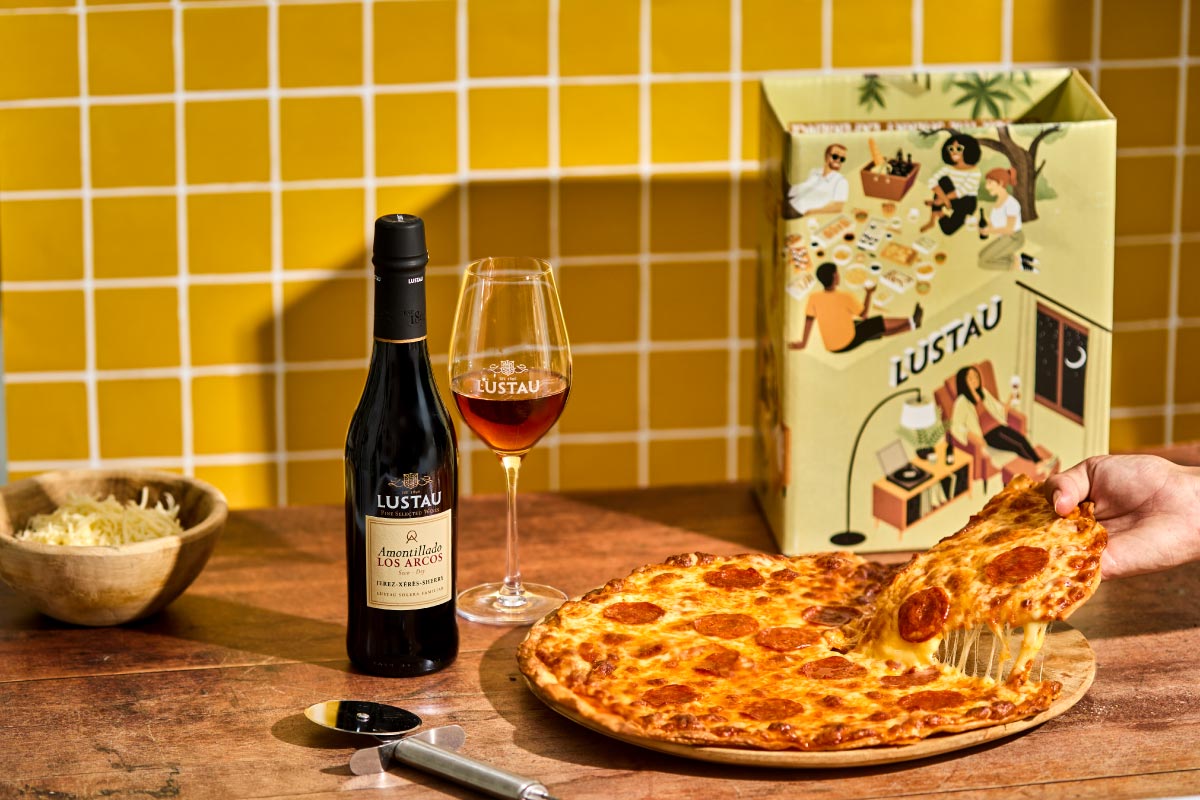
Take a sip before your first bite. Notice the dryness and saline edge, then follow with crust, tomato, mozzarella, and pepperoni in one mouthful. The wine sharpens the tomato’s brightness and cuts through melted cheese and rendered fat, while oxidative hints of toasted hazelnut echo the caramelized crust and crisped cured meat.
On the next bite, reverse the order: chew first, then sip. The amontillado refreshes and restructures the palate, revealing layers of fermentation, spice, and gentle char. The pairing succeeds through both contrast and resonance — fat met with dryness, acidity aligned with acidity, umami answered with umami.
FREQUENTLY ASKED QUESTIONS ABOUT PIZZA AND SHERRY
Can I Pair Other Sherries with Pizza?
Yes — but the style matters. Fino and manzanilla work beautifully with simpler slices such as marinara or mushrooms, where delicacy and salinity are enough. Oloroso can handle heavier, meat-driven versions, though it may feel broader alongside tomato acidity. For balanced richness — especially with cheese and cured toppings — amontillado often provides the most complete and versatile sherry with pizza.
Is NYC-Style Pizza Different from Neapolitan Pizza?
Very much so. Neapolitan pizza is softer, more delicate, and traditionally baked at higher temperatures for a shorter time, resulting in a tender, airy crust. NYC-style pizza is thinner, firmer, and designed to be folded. It uses low-moisture mozzarella and often features bolder toppings, creating a structure that welcomes more oxidative and savory wine pairings.
What Are Some Creative Toppings That Work with Amontillado?
Beyond classic pepperoni, consider toppings that enhance umami and subtle spice: roasted mushrooms, caramelized onions, fennel sausage, or thin slices of jamón after baking. A touch of aged hard cheese or a light drizzle of olive oil can further amplify the oxidative warmth of amontillado, reinforcing the savory dialogue between slice and glass.