

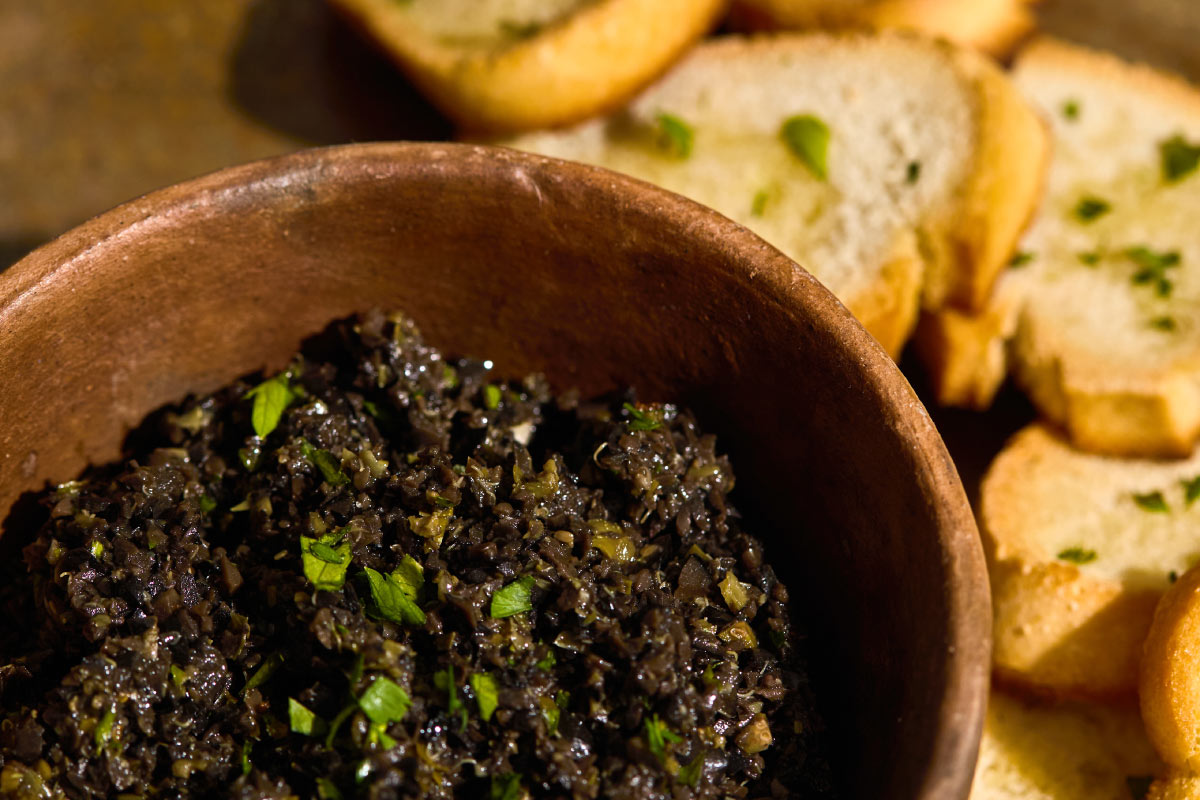
Some of the most unforgettable bites come in small, punchy packages. Black olive tapenade—salty, savory, and deeply Mediterranean—is one of those simple spreads that delivers instant intensity. Built on the backbone of briny olives, capers, anchovies, and good olive oil, it’s a rustic classic that can elevate anything from toasted bread to grilled vegetables.
But for all its assertiveness, tapenade isn’t a one-note wonder. Its layered flavors open the door to bold pairings, especially when you turn to the wines of Jerez. In particular, Lustau Fino del Puerto, with its piercing salinity and vivid coastal freshness, mirrors the tapenade’s structure while refreshing the palate between bites. In this post, we explore the origins of tapenade, how to make it at home, and why fino sherry is the ultimate partner for this robust Provençal spread.
THE MEDITERRANEAN ORIGINS OF TAPENADE
The word “tapenade” comes from the Provençal word “tapenas”, meaning capers—fitting, given that this humble flower bud shares center stage with olives in the original recipe. Though tapenade is closely associated with the cuisine of Provence in southern France, its lineage stretches across the Mediterranean. Variations of olive pastes and spreads can be found throughout southern Europe and North Africa, where preservation and bold seasoning were culinary cornerstones.
In Provençal tradition, tapenade is a symbol of shared meals, apéritifs under the sun, and the earthy elegance of rustic Mediterranean cooking. From Marseille, France to Málaga, Spain, the combination of crushed black olives, capers, anchovies, garlic, and olive oil has endured for its punchy flavor and sheer versatility.
WHY BLACK OLIVES DELIVER BOLD, UMAMI FLAVOR
What sets black olive tapenade apart isn’t just its saltiness—it’s the layered, savory depth that borders on umami. Black olives, especially those cured or fermented, develop glutamates and other flavor-enhancing compounds during processing. These amplify their earthy bitterness and create the sort of complexity normally associated with aged cheeses or cured meats.
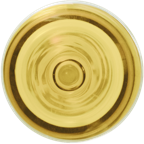
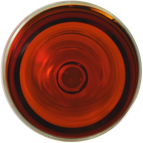
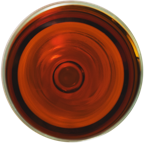
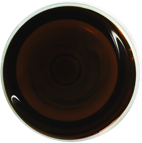
Explore the umami-enhancing potential of sherry wines below:
When blended with capers and anchovies—each bringing their own concentrated salinity and fermented undertones—the result is a flavor bomb in spreadable form. This concentration of umami makes tapenade an exceptional match for wines with similar oxidative or yeasty complexity, like fino or manzanilla, which can hold its own and even elevate the dish further.
WHY LUSTAU FINO DEL PUERTO IS THE IDEAL PAIRING FOR TAPENADE
Fino sherry is one of the world’s finest wines for salty, umami-laden foods — and black olive tapenade is no exception. With its bone-dry profile, brisk acidity, and extreme briny character, fino acts like a palate blade, slicing cleanly through richness and salinity.
This makes it a brilliant companion to tapenade’s deep Mediterranean flavors. The wine’s crispness refreshes the mouth after each bite, while its subtle bitterness and flor-derived aromas mirror the olives’ savory intensity. Together, they create a pairing of parallel flavors — where like meets like — but also a dynamic contrast of texture and structure.
THE UNIQUE COASTAL CHARACTER OF FINO DEL PUERTO
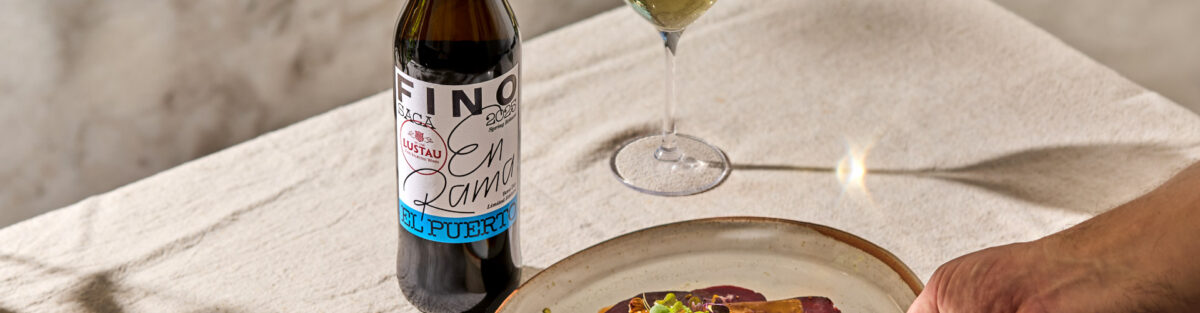
Lustau Fino del Puerto hails from El Puerto de Santa María, one of the three towns of the former Sherry Triangle and the one closest to the Atlantic Ocean. This proximity brings a marine influence to the aging bodegas: ambient humidity is high, the flor grows thick and healthy, and the wines take on unmistakable maritime traits — think iodine, seaweed, chalky minerality.
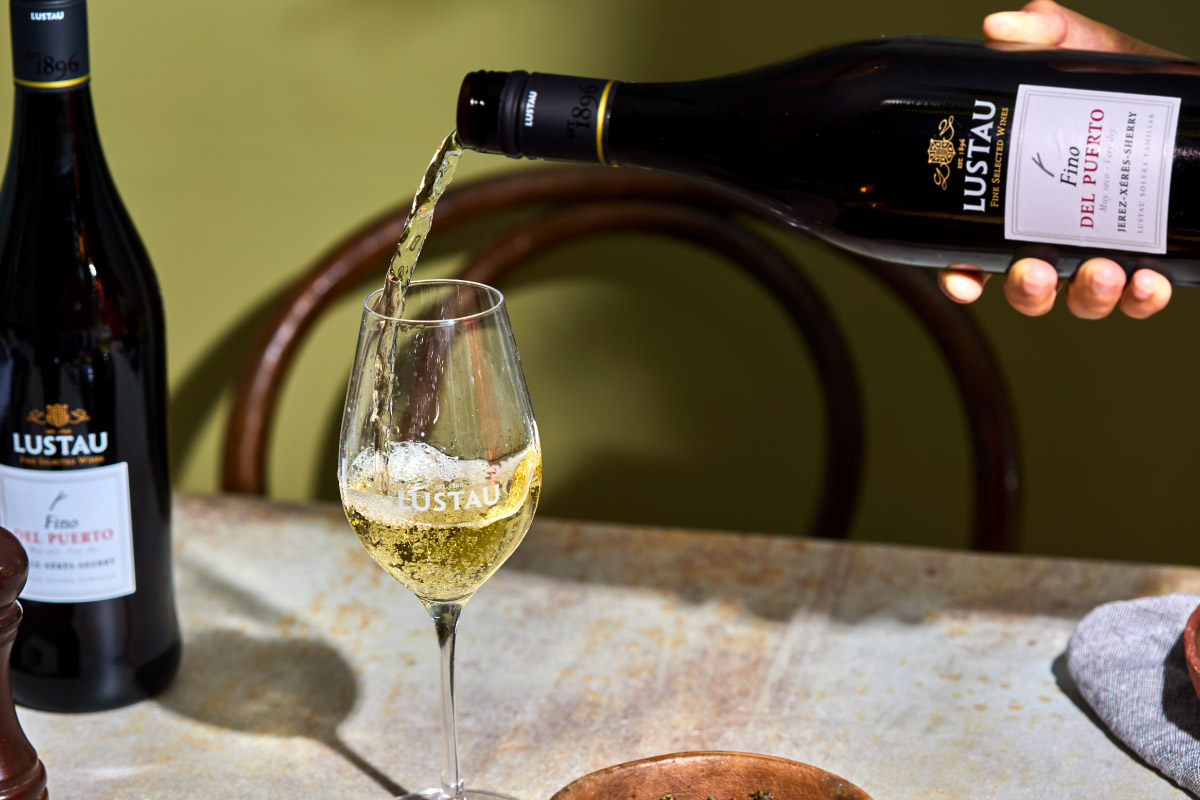
There’s a kind of resonance between the salt-kissed nature of both wine and spread, as if they share a common origin in sun-drenched, windswept terrain. It’s a pairing that feels elemental — earth, sea, and time, all captured in two simple bites.
HOW TO MAKE CLASSIC BLACK OLIVE TAPENADE AT HOME
Tapenade may taste complex, but it comes together with just a handful of Mediterranean pantry staples. The star is, of course, the black olive — traditionally Niçoise or Kalamata — offering deep, earthy flavor and a natural saltiness. To this, classic recipes add capers for sharpness, anchovy fillets for savory depth, garlic for heat, and extra virgin olive oil to bind it all into a luscious, spoonable spread.
Some variations include lemon zest, fresh herbs like thyme or rosemary, or even a splash of brandy or sherry vinegar. But the essence lies in balance — bold yet smooth, intense but not overpowering.
STEP-BY-STEP GUIDE TO CRAFTING THE PERFECT SPREAD
1. Pit the olives (if necessary) and rinse the capers to remove excess brine.
2. In a food processor, combine:
– 1 cup pitted black olives
– 2 tablespoons capers
– 2 anchovy fillets
– 1 garlic clove
– 2–3 tablespoons extra virgin olive oil
– (Optional) a squeeze of lemon juice or a pinch of fresh herbs
3. Pulse until the mixture forms a coarse paste. Adjust oil and seasoning to taste.
Serve immediately or refrigerate for a few hours to allow flavors to meld.
SERVING IDEAS: TOASTS, VEGGIES, AND BEYOND
Tapenade is endlessly versatile. Spread it on toasted baguette slices for a rustic appetizer, use it as a dip for raw vegetables, or fold it into pasta or roasted potatoes. It also makes a fabulous sandwich layer — especially when paired with tomato, goat cheese, or cured meats.
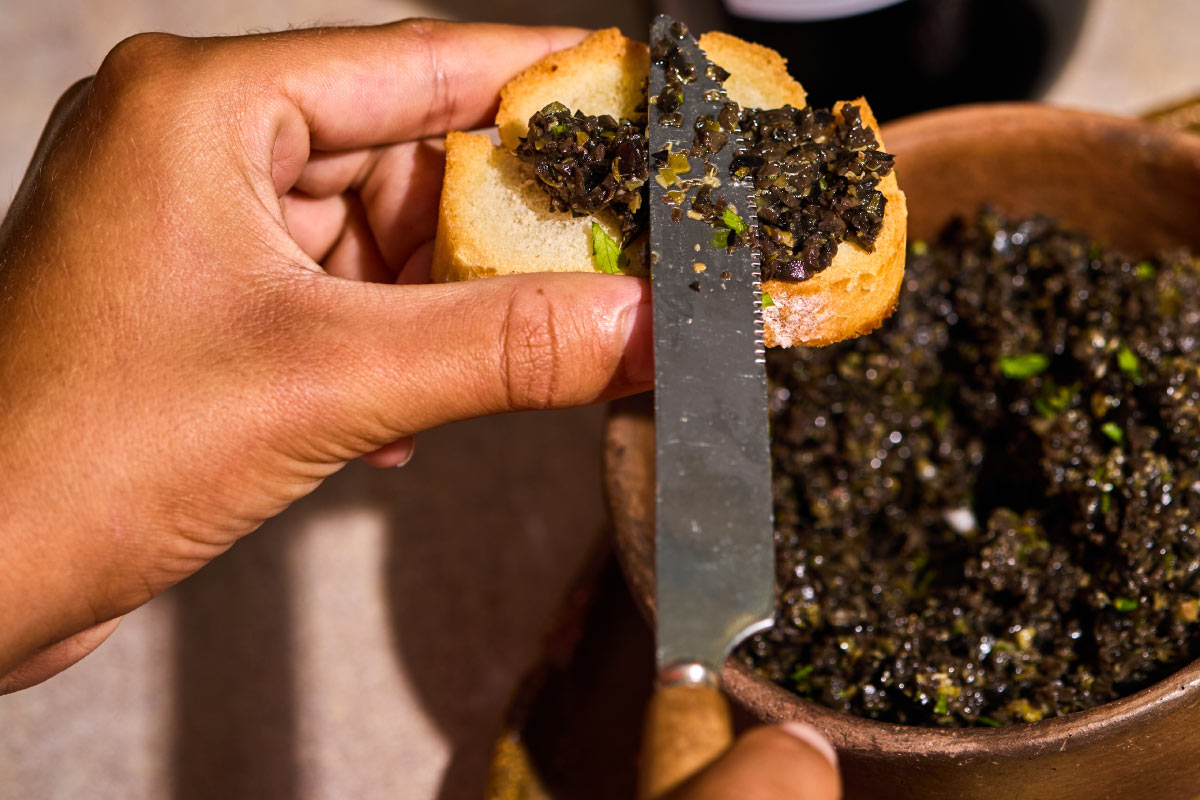
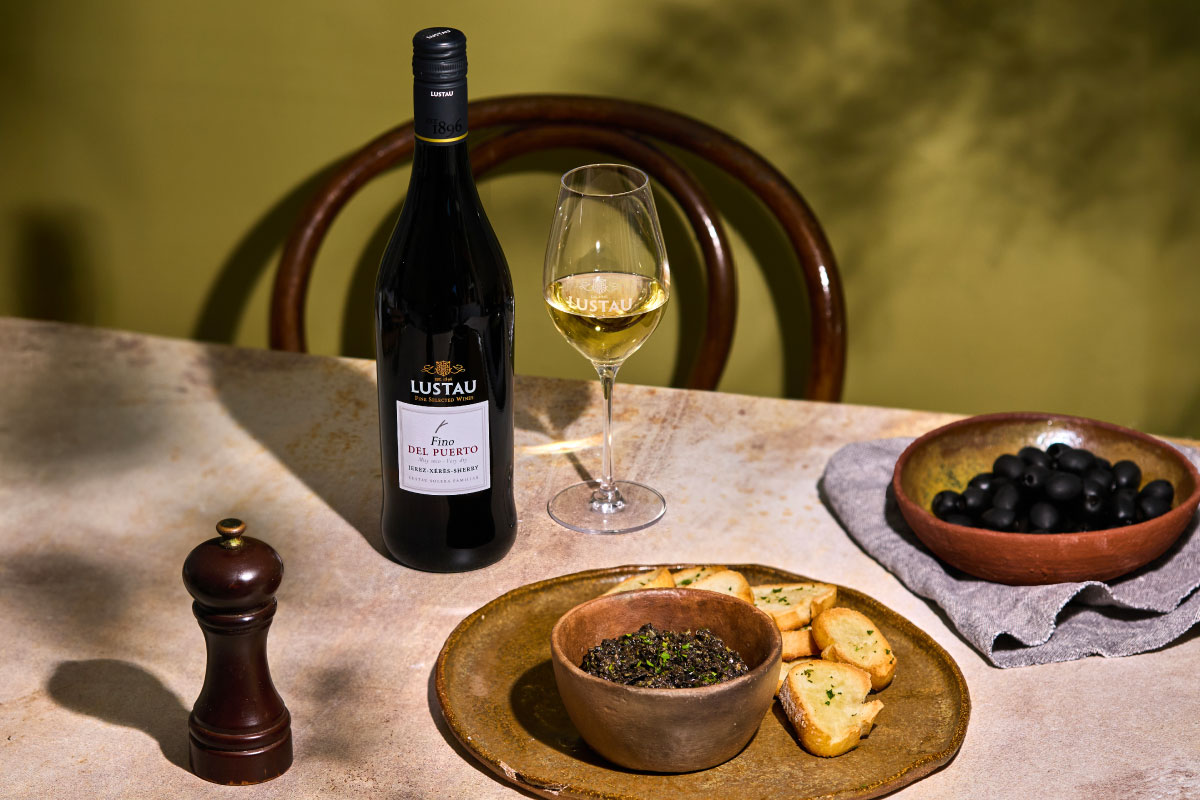
With a chilled glass of Lustau Fino del Puerto on the side, even the simplest tapenade bite becomes a refined aperitivo moment.
It is always aperitivo time!. Learn the basics and start enjoying this fantastic moment:
PAIRING BLACK OLIVE TAPENADE WITH FINO DEL PUERTO: A SIMPLE GUIDE
When pairing bold, salty foods like black olive tapenade, the wine needs both structure and freshness to rise to the occasion. Enter Lustau Fino del Puerto, a biologically aged wine that brings saline brightness, savory depth, and laser-sharp definition to the table.
This fino’s hallmark flavors — green almond, chalky minerality, and a sea breeze salinity — echo the briny intensity of olives and capers while cutting through the tapenade’s natural oiliness. The tangy lift from the flor yeast aging in El Puerto de Santa María adds complexity and keeps each bite-and-sip combo refreshing, never heavy.
Serve the tapenade slightly chilled on toasted slices of bread and pour the fino just as cold — around 7-9 ºC – 44-48 ºF. It’s an effortlessly elegant pairing that captures the spirit of Mediterranean aperitivo culture: relaxed, vibrant, and deeply satisfying.
FREQUENTLY ASKED QUESTIONS ABOUT TAPENADE AND SHERRY PAIRINGS
Can I Use Green Olive Tapenade Instead?
Absolutely. While black olive tapenade delivers more richness and umami, green olive versions are brighter and often more herbaceous. They pair beautifully with other biologically aged sherries, especially manzanilla, whose delicate salinity and floral edge echo the lift of green olives. If your green tapenade includes anchovies or lemon zest, the pairing becomes even more dynamic.
Does Tapenade Pair Better as an Aperitivo?
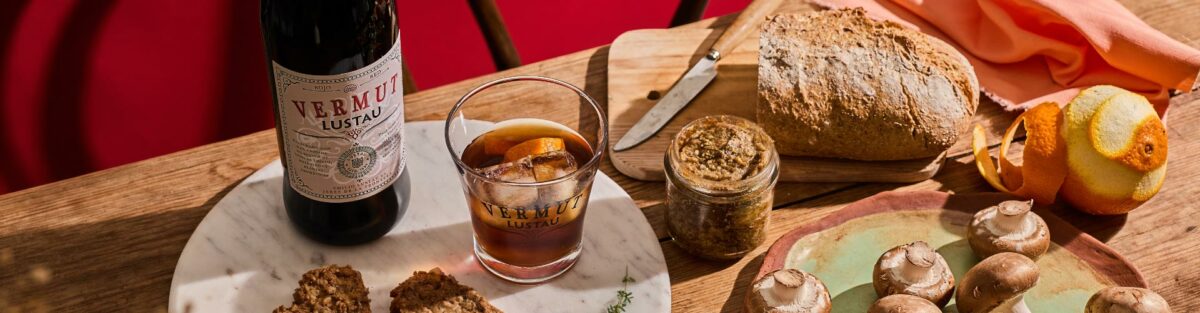
Tapenade was practically made for the aperitivo hour. Its salty punch stimulates the palate, making it the perfect opener for meals. Paired with Lustau Fino del Puerto (or any Vermut Lustau), it takes on a more refined dimension — both are dry, intense, and built to awaken your senses. Served with breadsticks, crudités, or even crisp potato chips, it’s an ideal way to begin any gathering.
How Long Can Homemade Tapenade Be Stored?
Stored in an airtight container in the fridge, homemade tapenade will last up to one week — sometimes longer if topped with a thin layer of olive oil to prevent oxidation. Let it come to room temperature before serving to fully release its aromas and soften the texture. It can also be frozen for up to three months without significant loss of flavor.