





Brandy de Jerez is a spirit distilled from wine, aged in oak casks that once held sherry wines, matured using one of the most distinctive aging systems in the world of spirits. Sherry is a fortified wine. Brandy de Jerez is a wine-derived spirit: the wine is distilled first, and time in cask does the rest. At the pinnacle of the traditional classification is Brandy de Jerez Solera Gran Reserva, where long maturation, sherry-seasoned oak and careful blending come together.
Lustau Brandy de Jerez collection is built on that idea, and Lustau Brandy Solera Gran Reserva is one of its flagship expressions. In this guide we follow the spirit from base wine and distillation to sherry casks, aging and serving, to understand exactly what makes this category unique.
What is Brandy de Jerez Solera Gran Reserva?
As featured on our latest article about this unique spirit, Brandy de Jerez is a protected geographical indication. Its specification says the spirit must be made from wine spirits aged in oak casks that were previously seasoned with sherry wines and aged under the criaderas and solera system (or, exceptionally, the añadas system). It must be aged in the production zone, which is limited to three towns: Jerez de la Frontera, El Puerto de Santa María and Sanlúcar de Barrameda. Bottling must also take place there, and the minimum strength is 36% ABV.
Learn more about the solera and criaderas system below:
The difference between sherry and brandy is simple but fundamental. Sherry is wine. Brandy is a distilled spirit, so there is no “flor”, no fortification and no wine-style classification in its production. What they do share is the “urban” terroir: the cellar, the same cask culture and the same solera method and team involved in the wine production.
The climate matters too. The area enjoys around 300 days of sun a year and an average annual temperature between 16 and 20°C, with relative humidity above 70%, balanced by the humid “poniente” wind from the Atlantic and the dry, warm “levante”.
What does Solera Gran Reserva mean?
Solera Gran Reserva is a category, defined by a minimum average age and, therefore, a certain profile. A Brandy de Jerez Solera Gran Reserva needs an average age of more than three years (36 months).
How Brandy de Jerez is made
The process is a sequence of five core decisions and steps: base wine, distillation, selection of spirits, oak aging and blending.
1. The base wine.
Brandy begins with young, fresh and fruity wines. These wines are selected because they preserve the volatile compounds that contribute aroma, flavor and complexity to the final spirit. It is not about neutral alcohol but a base to start with that will impart a myriad of nuances, aromas and flavors. The most common variety used in the region is Airén, harvested late to reach 12–13% ABV. The resulting wines are balanced enough to be drunk as table wine, and they are distilled without their lees, which gives a very aromatic spirit.
The use of a high-quality, fully ripened grape variety that produces balanced wines rather than acidic, low-alcohol base wines is the first key to understanding the richness of Brandy de Jerez.
2. Distillation.
Wine spirits are made in two types of still. Copper pot stills, used mostly for “holandas”. Column stills are used to produce higher-proof spirits. The “holandas” used to craft Lustau brandies are distilled slowly in copper pot stills and come off at around 65% ABV. Between three and four liters of wine are needed to obtain one liter of spirit.
The strength of the spirit defines its character, and the specification recognizes three families:
• Holandas (low proof): under 70% ABV.
• Medium-strength spirits: from 70% to under 86% ABV.
• Wine distillates: from 86% to under 94.8% ABV.
Lower strength means more flavor. Holandas retain far more aromatics that come from wine (acids and esters for example).
3. Selection and blending. M
aster blenders choose spirits only by nose. Each house defines its own method: the number of criaderas, the fraction withdrawn at each stage, the strength of the base spirit and type of cask used. The combination of these factors is a house decision, and that is where the brandy personality starts coming out.
Sherry casks and the aging system
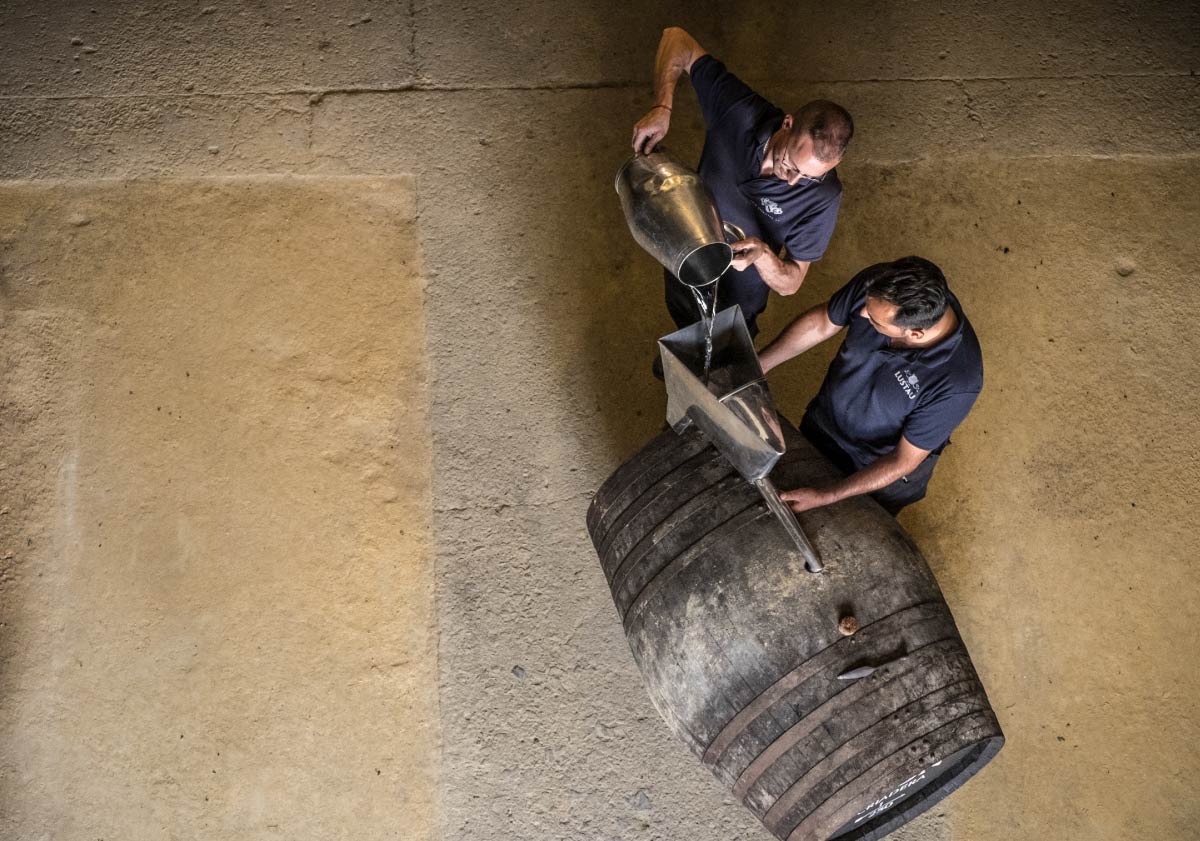
If distillation gives brandy its backbone, the sherry cask gives it its final identity. In the region, brandy de Jerez is aged in oak casks which must have previously had sherry wines. At Lustau, American oak is the preferred type of wood. Casks have a full capacity between 500 and 600 liters, seasoned with sherry wines for at least 12 years.
Over time the brandy dissolves and absorbs the sediments and residual wine compounds absorbed into the wood over decades of maturation. The wine previously held in the cask directly influences the aroma and flavor of the resulting brandy:
• Fino or manzanilla casks tend to produce lighter, fresher and more delicate brandies.
• Amontillado and palo cortado casks tend to produce balanced, savory brandies with elegant nutty notes, while oloroso casks create richer and darker expressions characterized by walnut, spice and caramelized flavors.
• Pedro Ximénez casks produce the richest, darkest and sweetest profiles.
In the case of Lustau Brandy de Jerez Solera Gran Reserva, it is aged in very old American oak casks that have held Oloroso for decades, giving it characteristic notes of roasted walnut, dark chocolate and candied citrus.
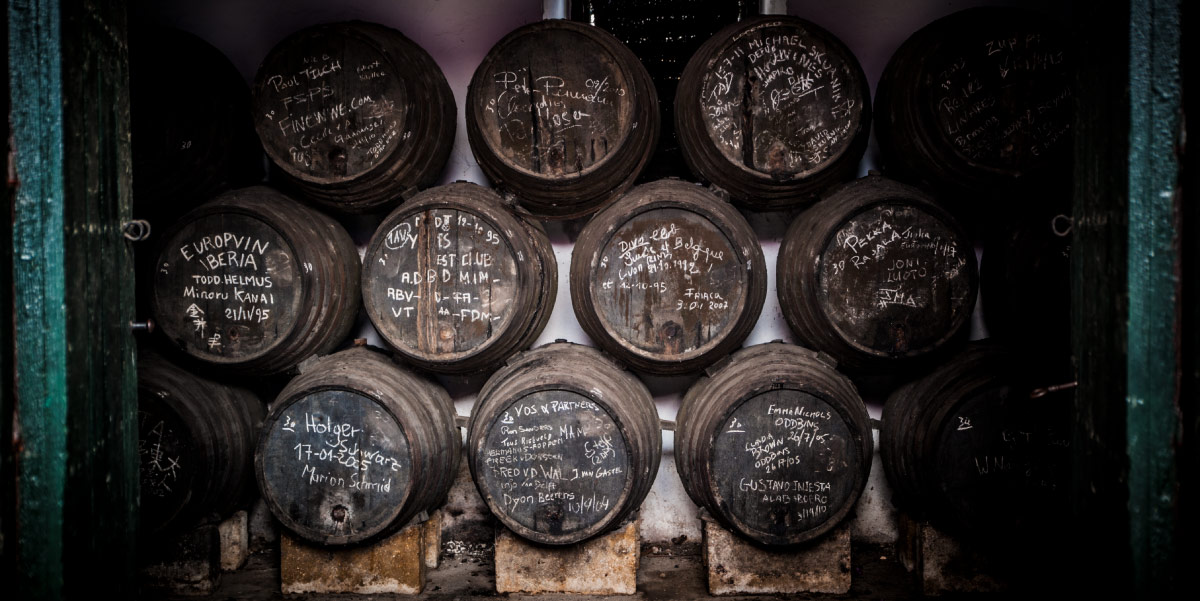
The aging is organized through the same dynamic blending method used for sherry wines. Casks are stacked in rows according to the age of the brandy inside. The row at floor level is the solera. The rows above are the criaderas. Only a small part of each cask is taken out, and the gap is refilled with brandy from the stage above. The youngest spirits enter at the last criadera. This process is repeated every time brandy is bottled.
This constant blend has three important effects. It guarantees consistency in flavor, aroma, identity and color. It encourages a very gentle maturation, thanks to the constant interaction between older and younger brandies within the same system. And lastly, it improves the extraction of compounds from the wood and the wine.
This system requires an exceptional level of commitment and expertise from the team as it is probably one of the most labor-demanding aging processes due to the multiple steps involved and the expertise required.
Solera Gran Reserva explained
Solera Gran Reserva is the top tier of the three traditional categories of Brandy de Jerez, and the one that tells you the most about what is in the glass. It needs an average age of more than three years in sherry-seasoned oak and a higher concentration of aroma. In other words, it is generally regarded as the most complex and concentrated expression of Brandy de Jerez, gathering the highest levels of quality and depth.
As a result, Solera Gran Reservas are rounded, with a smooth texture, good length and a sense of layers: complexity builds with every sip. They are generally classified as a dry spirit; however, their concentration and complexity often create a perception of richness and sweetness.
As mentioned above, the cask drives the style. Dried fruit, nuts, toasted wood, dark chocolate, coffee, tobacco, vanilla and spice are the territory. Oloroso casks lean toward walnut and dark chocolate, Amontillado casks toward smoked wood and hazelnut, and PX casks add dried fig, raisin and a sweeter, rounder finish.
How to read a Brandy de Jerez Solera Gran Reserva label
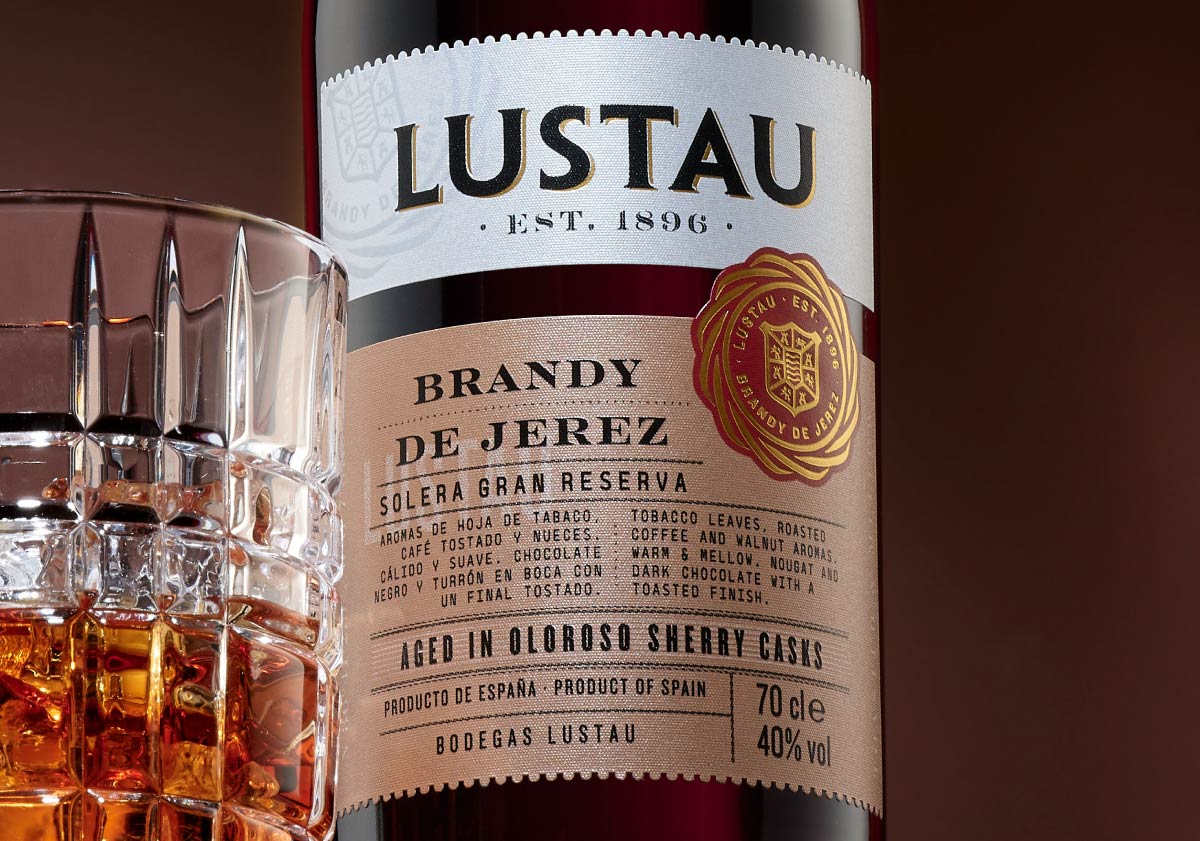
• Find the full name. The label should show “Brandy de Jerez” and the type, “Solera Gran Reserva”. A generic “brandy”, or “Gran Reserva” on its own, does not carry the same guarantees.
• Check the age statement. Three years of average aging is the minimum. If a brand states a number, it describes the average age of its solera, not of every drop, so compare it with the producer’s technical sheet.
• Look for the cask. “Aged in oloroso sherry casks” tells you the style before you open the bottle: nuts and dark chocolate for oloroso, smoked wood for amontillado, sweeter fruit for pedro ximénez.
• Read the strength. 36% is the legal minimum. A higher ABV, such as 43%, usually means more intensity in the glass.
• Spot the guarantee mark. Brandies sold under the name carry the regulatory council’s guarantee seal or logo, which backs the claim of origin, aging and bottling in the region.
How to enjoy Lustau Brandy Solera Gran Reserva
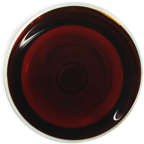
Lustau Brandy de Jerez SGR has a bright mahogany color with golden reflections. The nose reveals notes of tobacco leaf, roasted coffee and walnuts with lovely, delicate candied orange notes. The palate is rich in dark chocolate notes and its characteristic bitterness, with a warm, smooth texture and a long, toasted, complex finish.
Enjoying Brandy de Jerez Solera Gran Reserva can be done in a variety of situations and, thanks to its versatility, lends itself to numerous culinary applications. There are no wrong moments, only different ones.
Obviously, when sipped neat, one will be able to fully appreciate their complex qualities. At this point, the serving temperature is a very important factor: We recommend that Lustau Brandy Solera Gran Reserva always be served between 10ºC and 15ºC (50-59 Fahrenheit) for a maximum harmony of all its aromatic and flavor nuances. Use fine glassware to get the most out of the highest-quality brandies.
If you prefer to soften its intensity without losing nuance, add a large ice cube, or go the modern digestif route and serve it very cold in short shots, close to 0°C.
A splash in a good espresso, hot or over ice, gives you a carajillo, a Spanish classic.
It also shines in stirred and sour-style cocktails. Try the Sidecar with brandy or browse more Lustau cocktails. And since a good drink deserves a good soundtrack, the House of Lustau has put together a Spotify playlist of spirit-forward, colorful music to pair with its sherry, vermouth and brandy-based cocktails.
At the table, cured cheeses, dark chocolate, roasted almonds, hazelnuts and dried apricots are natural partners.
FAQ
Is Brandy de Jerez the same as sherry?
No. Sherry is a fortified wine. Brandy de Jerez is a wine spirit, distilled and then aged in sherry-seasoned oak. They share cellars, casks and the solera system, but not production methods.
What does Solera Gran Reserva mean?
It is a category for brandies with an average aging of more than three years, plus minimum levels of volatile substances, color and tartaric acid. It is not a vintage, and individual products can age much longer.
What are holandas?
Holandas are low-strength wine spirits, under 70% ABV, distilled in copper alquitaras. They keep more of the wine’s aromatic compounds and are the traditional base of Brandy de Jerez.
Which sherry casks are used for Lustau brandy?
Lustau Brandy Solera Gran Reserva ages in old American oak casks that held Oloroso for decades. The Reserva uses Amontillado casks, while the Finest Selection and the Family Reserve use casks that held Oloroso and Pedro Ximénez.
How should Brandy de Jerez be served?
Neat at 10 to 15°C in a balloon or wide wine glass, over ice, in a carajillo or in cocktails. Cured cheese, dark chocolate and nuts are natural partners.