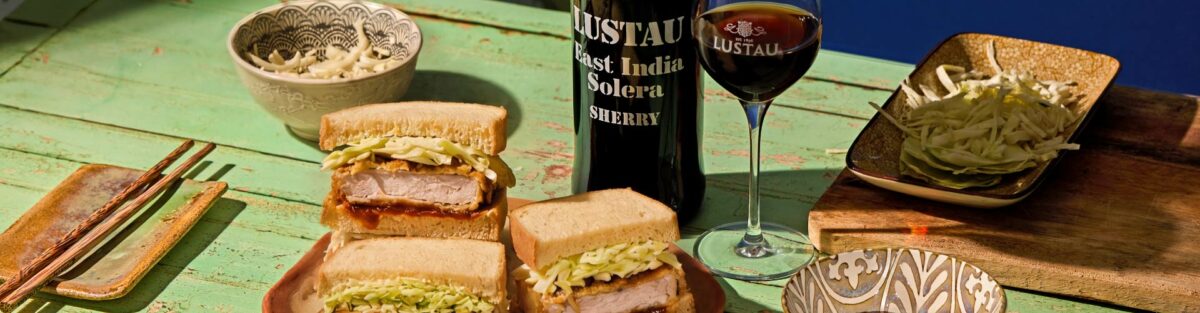








Few sandwiches combine richness, texture, and sweet-savory intensity quite like a katsu sando. Built around a crisp panko-coated cutlet, soft bread, fresh cabbage, and a generous layer of tangy tonkatsu sauce, this Japanese classic brings together contrasts that make it particularly exciting at the table.
For our katsu sando pairing, we turn to Lustau East India Solera, a distinctive cream sherry combining the structure and oxidative complexity of oloroso with the richness of pedro ximénez. Its notes of raisin, maple syrup, brown sugar, prune, burnt orange peel, spice, and nuts find natural echoes in the fried crust, savory pork, and dark, slightly sweet sauce.
Yet this is not simply a case of matching richness with richness. The fresh crunch of cabbage brings contrast to the sandwich, while the wine’s acidity provides balance to its sweetness. The result is a Japanese food wine pairing built around both complement and contrast: crisp and velvety, savory and sweet, fresh and deeply complex.
What Is a Katsu Sando?
A katsu sando is a Japanese sandwich built around katsu: a cutlet coated in panko breadcrumbs and fried until crisp and golden. Pork—usually referred to as tonkatsu—is perhaps the most iconic version, although chicken katsu is also widely enjoyed.
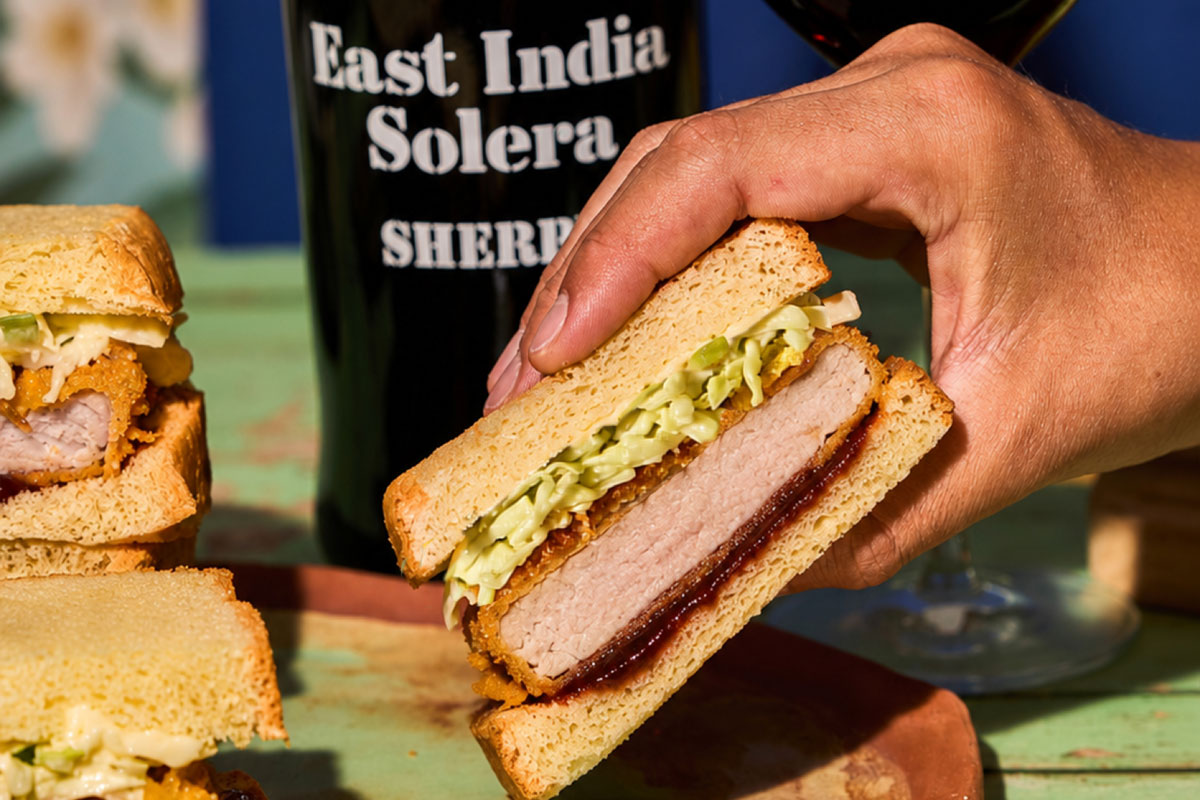
The cutlet is traditionally tucked between slices of exceptionally soft Japanese milk bread, or shokupan, often accompanied by finely shredded cabbage and tonkatsu sauce. The latter is essential to the personality of the sandwich: dark, tangy, fruity, savory, and slightly sweet, it provides a powerful counterpoint to the fried meat.
What makes a great Japanese pork sandwich so satisfying is the interplay of textures. The bread is tender and pillowy, the panko crust brittle and crisp, the pork juicy and substantial, and the cabbage fresh and crunchy. Tonkatsu sauce ties those elements together with sweetness, acidity, and umami.
That combination also explains why the katsu sando is such an interesting candidate for wine pairing. Rather than asking a wine to respond to one dominant flavor, the sandwich presents several at once: fat, salt, sweetness, umami, toasted flavors, freshness, and crunch.
From Tonkatsu to the Japanese Pork Sandwich
The katsu sando is closely connected to tonkatsu, the Japanese breaded pork cutlet that emerged during the country’s embrace and reinterpretation of Western-style cooking in the late nineteenth and early twentieth centuries. Eventually, placing the cutlet between slices of bread transformed the dish into a convenient sandwich while preserving the defining contrast between succulent meat and crisp panko coating.
Today, the katsu sando can range from an everyday comfort food to an elaborate restaurant creation. Yet its appeal remains remarkably straightforward: good bread, a properly fried cutlet, sauce, and enough freshness to balance the richness.
Why Crispness, Umami, and Sweet-Savory Sauce Matter for Pairing
From a pairing perspective, the katsu sando becomes particularly interesting when its components are considered individually.f
The pork brings richness and savory intensity, while frying adds toasted flavors and a crisp texture. Tonkatsu sauce introduces sweetness, tang, and additional umami, creating a bridge toward wines with greater concentration and some degree of sweetness. Meanwhile, shredded cabbage provides freshness and crunch, preventing the sandwich from becoming excessively heavy.
This means the wine with katsu sando needs enough personality to accompany the pork and sauce without overwhelming the dish. It should also respond to the sweet-savory character of the sauce and complement the browned, toasted qualities of the fried crust.
That is precisely where Lustau East India Solera becomes such an intriguing partner.
Why Lustau East India Solera Pairs with Katsu Sando
The success of this East India Solera pairing begins with the unusual combination of flavors within the sandwich itself. A katsu sando is simultaneously rich, savory, sweet, tangy, and crisp, so it calls for a wine with enough depth to engage with all those elements.
Lustau East India Solera is a cream sherry made from oloroso and PX. The two wines are aged separately in their respective soleras for 12 years before being blended and returned to a 45-cask solera for a further three years of aging. This additional maturation creates a wine of remarkable integration, combining the structure and oxidative character of oloroso with the sweetness and concentration contributed by pedro ximénez.
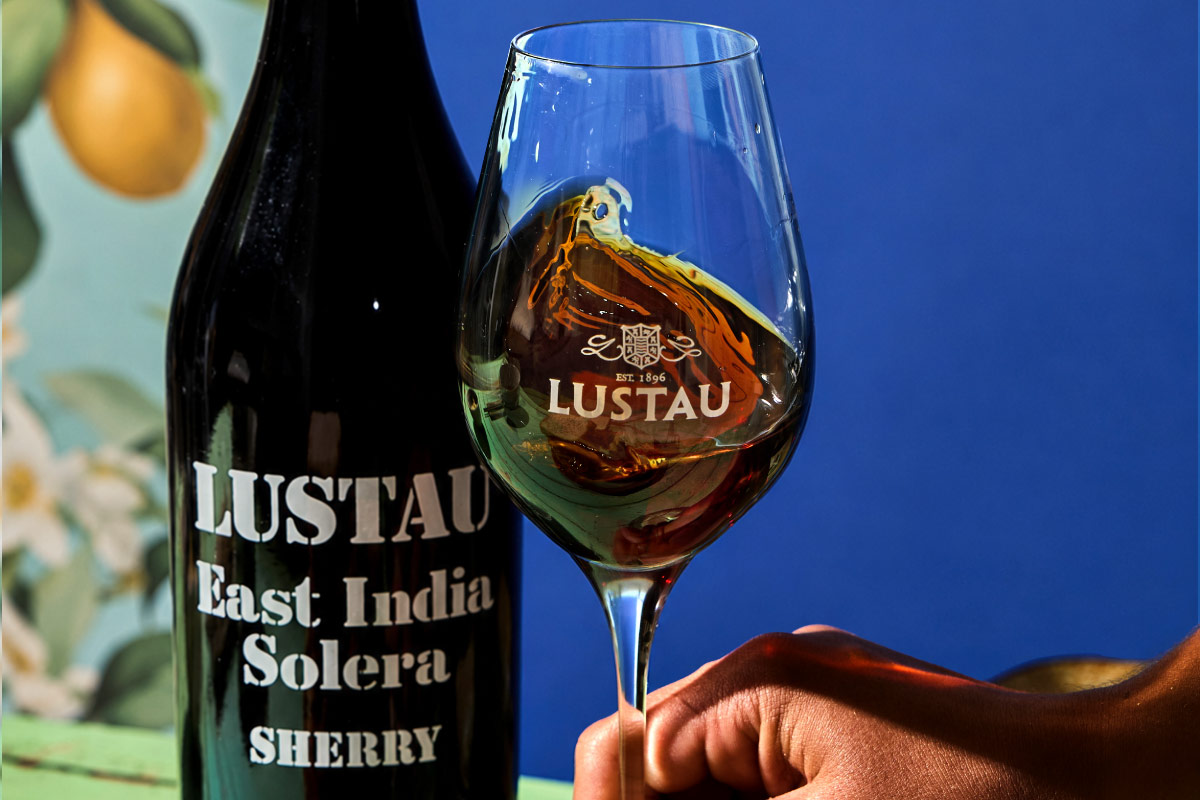
That combination is particularly well suited to katsu sando. The oloroso component has the depth to stand alongside the fried pork and toasted panko, while PX provides the richness and sweetness needed to meet the dark, fruity character of tonkatsu sauce. At the same time, the wine retains enough acidity to keep its sweetness balanced—a particularly important quality when paired with such a substantial dish.
Learn more about cream sherry styles below:
Sweetness Meets Tonkatsu Sauc
One of the most important principles when pairing wine with a dish containing a sweet component is to consider the relationship between their respective levels of sweetness. A bone-dry wine can sometimes appear austere when confronted with a noticeably sweet sauce.
Tonkatsu sauce makes this especially relevant. Its character is not simply sweet: it combines fruitiness, tanginess, spice, and umami into a concentrated glaze that becomes one of the defining flavors of the sandwich.
Lustau East India Solera meets that intensity naturally. Its smooth, rich palate and notes of raisin, prune, brown sugar, maple syrup, and burnt orange peel echo the darker sweet and fruity qualities of the sauce rather than competing with them. The pairing therefore works through resonance, with each reinforcing similar elements in the other.
For a deeper look at how this balance between dry oloroso and sweet pedro ximénez defines the category, explore our guide to cream sherry:
Oxidative Complexity Meets Fried and Toasted Flavors
The second bridge is less obvious, but perhaps even more interesting.
Frying creates flavors that go well beyond richness. As the panko turns deep golden and crisp, it develops toasted, roasted notes that resonate with the nutty and oxidative character found in mature oloroso-based wines.
Lustau East India Solera brings precisely this kind of complexity. Behind its dried-fruit sweetness are nutty, spicy, and deeply developed flavors created through years of oxidative aging. Those characteristics connect naturally with the browned crust of the katsu and the savory intensity of the pork.
Texture completes the experience. The crisp panko, juicy meat, soft bread, glossy sauce, and crunchy cabbage create several sensations in a single bite, while Lustau East India Solera contributes richness and smoothness of its own. The cabbage provides an important counterpoint, bringing freshness and crunch to both the sandwich and the overall pairing.
This is ultimately why sherry and Japanese food can create such compelling combinations. Rather than relying on a single point of contrast, the pairing can connect multiple dimensions at once—sweetness, umami, texture, oxidative character, and intensity.
How to Prepare a Classic Katsu Sando
A great katsu sando depends on relatively few ingredients, which means each one matters. The goal is a sandwich with clearly defined layers: tender meat surrounded by a deeply crisp crust, enough tonkatsu sauce to provide sweet-savory intensity, fresh cabbage for contrast, and soft bread that holds everything together without competing for attention.
For our katsu sando recipe, pork is the natural starting point, particularly because its richness creates such a satisfying match with East India Solera.
Choosing and Frying the Katsu
Choose a thick, evenly cut piece of pork loin or boneless pork chop. Gently flatten it if necessary so that it cooks evenly, but keep enough thickness to preserve the juicy, substantial center that defines a good pork katsu.
Season the pork, lightly coat it in flour, dip it into beaten egg, and finally cover it generously with panko breadcrumbs. Press the crumbs gently onto the surface so the coating adheres without becoming compressed.
Fry until the exterior is deeply golden and crisp and the pork is safely cooked through. Once removed from the oil, allow the katsu to rest briefly on a rack so excess oil can drain without trapping steam underneath—a small detail that helps preserve the all-important crispness.
The visual goal is exactly what we see in our finished sandwich: a substantial piece of juicy pork surrounded by a clearly defined, crunchy golden crust.
Building the Sandwich: Bread, Cabbage, and Tonkatsu Sauce
Soft Japanese milk bread, or shokupan, provides the classic foundation. Its fine, tender crumb creates a deliberate contrast with the crisp katsu rather than adding another hard or chewy texture.
Add a generous but controlled layer of tonkatsu sauce—the sauce should be clearly present in every bite without soaking the bread—followed by finely shredded fresh cabbage. The cabbage should remain crisp, providing freshness and textural relief against the fried pork and rich sauce.
Place the katsu between the bread, press gently to bring the layers together, and cut the sandwich cleanly to reveal its cross-section. Served immediately, the result should capture everything that makes katsu sando so compelling: softness and crunch, richness and freshness, sweetness and umami.
And those are precisely the contrasts that make the next sip of East India Solera so satisfying.
The Perfect Serve: Katsu Sando with East India Solera
This pairing is at its best when both the sandwich and the wine retain their defining characteristics: the katsu should arrive hot and crisp, while Lustau East India Solera should be served slightly chilled.
Serve Lustau East India Solera at 10–12°C (50–54°F) in a good white-wine glass, allowing enough room for its complex aromas to develop. Small to moderate pours work particularly well here, especially if the pairing is being served as part of a larger meal or tasting.
The katsu sando should be assembled shortly before serving so that the panko remains crisp and the bread does not absorb too much sauce. Cut the sandwich into halves or smaller portions to expose its layers and make it easy to enjoy alongside the wine.
Fresh cabbage is an important part of the balance, but the plate can also include Japanese pickles or another lightly acidic vegetable accompaniment. These fresh elements provide contrast between bites, while Lustau East India Solera engages with the richer components of the sandwich: pork, fried panko, and tonkatsu sauce.
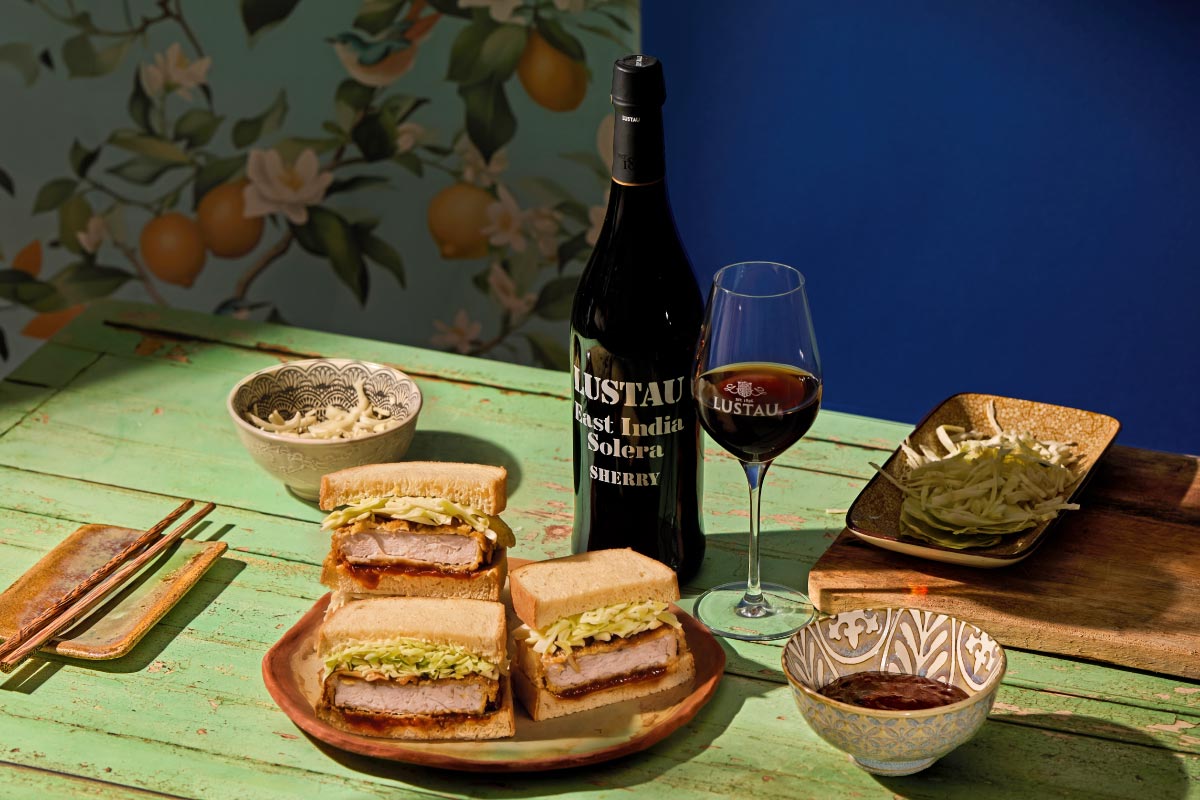
Most importantly, allow the wine and food to alternate. A bite reveals the savory pork, crisp coating, sweet-tangy sauce, and cabbage; the following sip introduces dried fruit, orange peel, spice, nuttiness, and sweetness. The pleasure of this katsu sando pairing comes from watching those flavors change one another rather than searching for a single dominant connection.
For more inspiration on matching different sherry styles with food, explore the Lustau Pairings guide. Lustau’s broader recommendations demonstrate just how naturally sherry can move across different cuisines, ingredients, and levels of intensity:
Katsu Sando Variations and Sherry Pairing Adjustments
Part of the appeal of katsu sando is how easily its basic structure can be adapted. Change the protein, seasoning, or sauce and the personality of the sandwich shifts, sometimes subtly and sometimes dramatically.
East India Solera can accommodate many of these variations because it combines sweetness with substantial flavor intensity and oxidative complexity. Nevertheless, understanding what changes in the sandwich helps explain why some versions create a particularly strong Japanese food wine pairing.
Pork vs. Chicken Katsu Sando
Pork remains our preferred version for East India Solera. Its richness and savory depth have enough intensity to stand alongside the wine, while the browned meat and crisp panko reinforce the mature, nutty character of the oloroso component.
Chicken creates a somewhat lighter katsu sandwich. The pairing still works—particularly when the tonkatsu sauce remains prominent—but the relationship shifts slightly toward the sauce and fried coating rather than the meat itself. The sweetness of East India continues to complement the sauce, while its oxidative notes find a bridge in the golden panko crust.
Whichever version you choose, avoid an excessively thin or dry cutlet. Juiciness is important not only to the quality of the sandwich but also to maintaining enough richness and texture to meet the wine.
Spicy and Plant-Based Variations
Adding heat introduces another interesting dimension. A spicy tonkatsu sauce, mustard, or measured amount of chili creates contrast with East India Solera’s sweetness, which can soften the perception of heat while preserving the sandwich’s savory character. The key is moderation: extreme chili heat can overwhelm the subtler oxidative nuances of the wine.
Plant-based versions can be equally compelling. Thick slices of eggplant or meaty mushrooms coated in panko and fried until crisp preserve much of the sandwich’s original textural structure. Mushrooms are particularly interesting because their pronounced umami character creates an additional bridge with mature sherry.
In either case, keep the elements that make the original pairing successful: crisp panko, a substantial filling, fresh cabbage, and enough sweet-savory sauce to connect with the wine. The filling may change, but the structural logic of the pairing remains remarkably similar.
FAQ About Katsu Sando and Sherry Pairing
What Wine Goes Best with Katsu Sando?
A wine with enough intensity to match the fried cutlet and enough richness to complement the sweet-savory tonkatsu sauce works particularly well with katsu sando. Lustau East India Solera brings these qualities together through its combination of oloroso and pedro ximénez. Its oxidative, nutty character complements the toasted panko and savory pork, while its sweetness creates a natural bridge with the sauce.
Is Lustau East India Solera a Sweet Sherry?
Yes. Lustau East India Solera is a cream sherry made from a blend of oloroso and pedro ximénez. The two components are aged separately before blending and undergoing further aging together in a dedicated solera. The result combines sweetness and concentration with the structure, complexity, and oxidative character of oloroso.
This balance is precisely what makes East India Solera so useful at the table: sweetness is an important part of its personality, but it is accompanied by enough complexity and freshness to work with savory dishes rather than being reserved exclusively for dessert.
What Temperature Should East India Solera Be Served At?
Lustau East India Solera is best served chilled at approximately 10–12°C (50–54°F). This temperature preserves freshness and balance while allowing the wine’s dried-fruit, nutty, spicy, and oxidative aromas to remain expressive.
Serve it in a good white-wine glass rather than an excessively small glass, leaving enough space for the aromas to develop. With katsu sando, moderate pours are ideal, allowing the wine to accompany the sandwich without overwhelming it.
Can Chicken Katsu Sando Be Paired with the Same Sherry?
Absolutely. Chicken katsu sando is generally lighter and more delicate than the pork version, but Lustau East India Solera can still make an excellent partner. In this case, the strongest connections come from the crisp panko coating and sweet-savory tonkatsu sauce rather than the meat itself.
Keep the chicken juicy, the coating deeply crisp, and the sauce sufficiently prominent. These elements give the sandwich enough flavor and texture to stand alongside the intensity of the wine.
What Sides Work with This Pairing?
Fresh and lightly acidic accompaniments work particularly well because the sandwich and wine already provide plenty of richness and intensity. Japanese pickles, cucumber salad, or simply additional finely shredded cabbage can refresh the palate and introduce another layer of texture.
Avoid excessively sweet or heavily sauced sides, which can make the combination feel too rich. The objective is balance: let the katsu provide the fried richness, the tonkatsu sauce the sweet-savory depth, the cabbage and sides the freshness, and Lustau East India Solera the final layer of complexity.