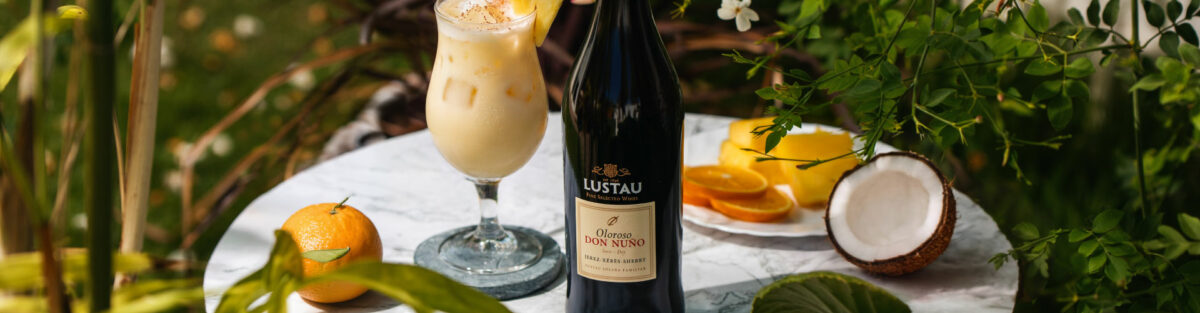

The Painkiller Cocktail is a staple of tropical mixology with a rich, velvety combination of dark navy rum, pineapple juice, orange juice, and cream of coconut, finished with a generous dusting of freshly grated nutmeg. Created on the white sands of the British Virgin Islands in the 1970s, the drink balances deep molasses sweetness, tropical acidity, with a smooth and creamy mouthfeel, securing its place alongside the Piña Colada and Mai Tai as an essential tiki cocktail. Our spin on this tasty island sipper uses Lustau Oloroso Don Nuño in conjunction with dark rum, which adds toasted nuts, dried fruit, and structure while keeping the alcohol content low. Try our Sherry Painkiller and turn any day into your next beach vacation.
COCKTAIL: Painkiller
Full Ingredients list
- 1oz (30ml) Lustau Oloroso Don Nuño
- 1oz (30ml) Pussers Rum
- 4oz (120oz) Pineapple Juice
- 1oz (30ml) Orange Juice
- 1oz (30ml) Cream of Coconut
- Garnish: Grated Nutmeg
Recipe author: Steven Dragun
What is a Painkiller cocktail?
The Painkiller was created by Daphne Henderson in the early 1970s at the Soggy Dollar Bar on White Bay, Jost Van Dyke, in the British Virgin Islands. The beachside bar earned its name because there was no dock; patrons had to swim ashore from their boats, arriving with wet currency to purchase Henderson’s signature concoction. Her original recipe was a closely guarded secret, blended by hand using whatever dark rum was on hand.
In the late 1970s, Charles Tobias, founder of Pusser’s Rum, befriended Henderson and sought to recreate her recipe. After duplicating the balance using Pusser’s, a British Royal Navy-style dark rum blended from Guyanese wooden pot stills and Trinidadian column stills. Tobias commercialized and trademarked the “Painkiller” name in 1989. This trademark led to one of the most famous legal disputes in modern bar culture. Pusser’s sued the celebrated Lower East Side tiki bar Painkiller for trademark infringement because the bar served Painkillers made with non-Pusser’s rum. The legal battle forced the bar to change its name to PKNY and alter its menu. The suit sparked widespread backlash from the bartender community, prompting boycotts of Pusser’s Rum across major U.S. cocktail hubs, though the legal precedent remains intact today. Officially, a drink named “Painkiller” on a commercial menu must feature Pusser’s Navy Rum.
While often compared to a Piña Colada, the Painkiller relies on a unique 4:1:1:2 ratio of pineapple juice, cream of coconut, orange juice, Pusser’s Navy Rum, and a critical dusting of nutmeg that cuts through the drink’s density. Although the Painkiller arrived much later than the Mai Tai and Piña Colada, the was quickly inducted into the pantheon of tiki cocktails.
You can replicate the Piña Colada with Sherry too. Learn how below:
Why use Lustau Oloroso Don Nuño in a tiki cocktail?
Lustau Oloroso Don Nuño serves as a powerful structural modifier and flavor architect in Tiki cocktails, delivering intense flavor, rich glycerin texture, and drying acidity without adding residual sugar. While Tiki drinks traditionally rely on sweet syrups, rich fruit juices, and high-proof rums, incorporating a bone-dry oloroso like Don Nuño solves several core balance and flavor chemistry challenges.
Tiki templates are frequently overloaded with high-sugar syrups (orgeat, passion fruit, fassionola, cream of coconut) and sweet fruit juices (orange juice, pineapple juice). Because Lustau Oloroso Don Nuño is fully fermented and aged oxidatively, it contains almost no residual sugar. Adding Oloroso to a tropical spec introduces drying oak tannins and sharp acidity that cuts through heavy sweetness without introducing extra citrus. Through years of oxidative concentration in the solera system, Don Nuño develops a high concentration of glycerin. This gives the liquid a dense, velvety, almost oily mouthfeel. In a cocktail, it matches the body and weight of heavy rums or rich syrups, allowing you to dry out a recipe’s sweet components without thinning the drink’s palate-coating texture.
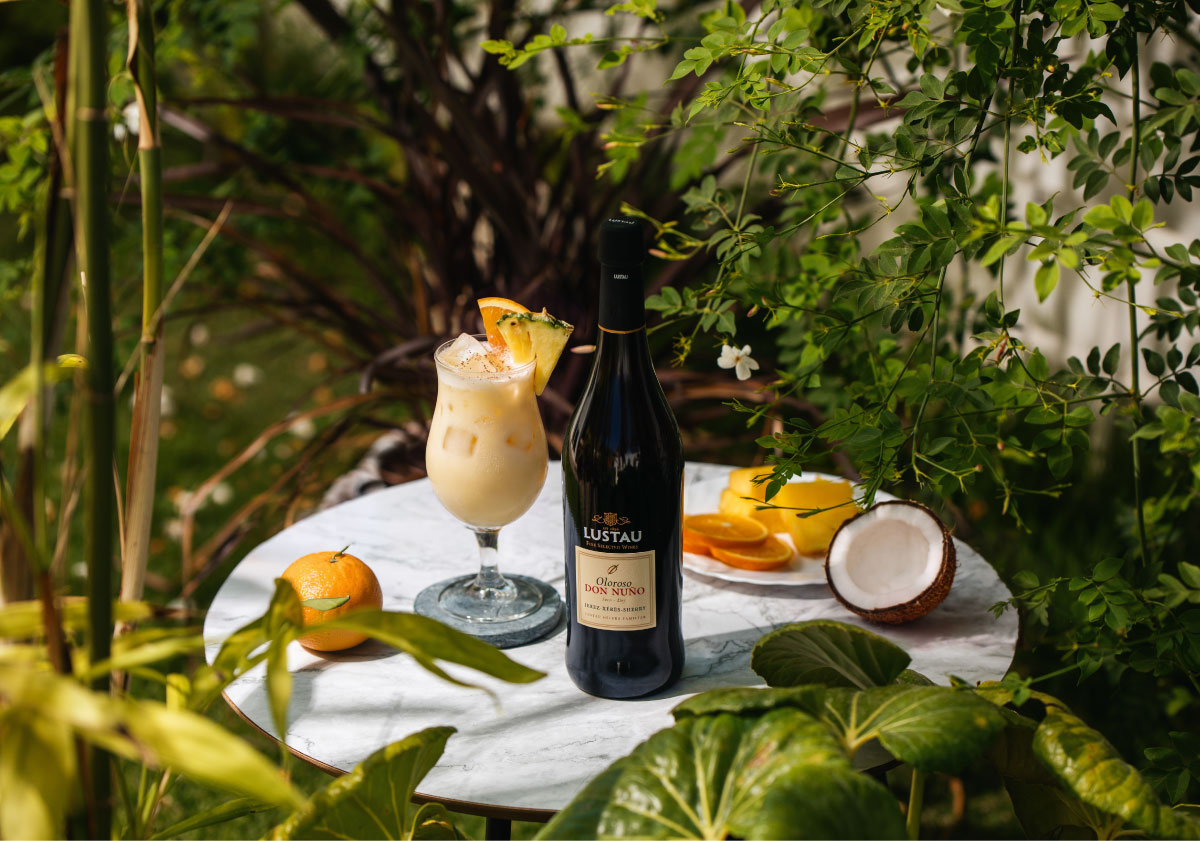
The aromatic profile of Lustau Oloroso Don Nuño has roasted walnut, hazelnut, dried fig, dark cocoa, orange peel, and shares key oak-derived lactones, vanillin, and roasted caramelization compounds with barrel-aged dark rums. The oxidized nutty notes soften the aggressive fruit esters of overproof Jamaican rums while preserving their depth and acts as an aromatic bridge between dark spirits and warm baking spices found in allspice dram, falernum, velvet pimento, and cinnamon syrup. In coconut-heavy tiki serves (like a Painkiller or Piña Colada) Don Nuño’s dry finish and subtle nuttiness slice through the dense fattiness of the coconut, preventing palate fatigue and keeping the drink light and refreshing from first sip to last.
How Oloroso adds nutty depth to pineapple, orange and coconut
Oloroso sherry introduces nutty depth to pineapple, orange, and coconut through a blend of shared volatile lactones, ester transformations, oxidative aldehydes, and lipid flavor transport. Fresh pineapple juice is high in bright, volatile tropical esters which give it a sharp, sweet, and acidic profile. Oloroso contributes a heavy amount of roasted, woodsy, and nutty aromas, alongside toasted caramel notes produced through prolonged oxidation in the solera. When mixed, the brain integrates the bright fruit esters with the nutty, roasted profile to give the illusion that the pineapple tastes charred, caramelized, or flambéed, rather than raw and acidic.
Fresh orange juice provides bright citrus terpenes and sharp citric acid, which can sometimes taste out of place against heavy coconut fats. Oloroso sherry brings two key oxidative compounds that deliver an intense bitter almond and marzipan aroma with concentrated notes of candied orange peel, dried fruit, and marmalade developed over years of air exposure in the barrel. These compounds bridge the gap between orange and coconut by providing fresh limonene with a toasted almond note, turning simple orange juice into a rich, complex citrus modifier.
In a cocktail containing cream of coconut, the coconut fats act as a physical solvent for oloroso’s nutty aromatic profile. Instead of evaporating instantly off the tongue, these volatile nutty compounds are trapped in the coconut fat. As the drink coats the mouth, the lipids slowly release the oxidative notes of the oloroso, creating a long, dry, finish with walnuts and cocoa that lingers long after the fruit sweetness fades.
How to balance sweetness, acidity and sherry complexity
Balancing sweetness, acidity, and sherry complexity requires treating sherry not just as a flavor agent, but as an active structural modifier that alters a cocktail’s total acidity, sugar density, and alcohol strength. Because sherry spans a vast spectrum, from bone-dry, high-salinity “flor-aged” wines to viscous, sun-dried dessert wines, achieving balance depends on whether the bottle acts as a drying modifier, a rich sweetener, or a low-ABV base spirit. A common pitfall when building sherry cocktails is assuming dry sherry provides sufficient acidity to balance a drink on its own, so scaling back the citrus a tad will help balance out the cocktail. Sherry can either strip perceived sweetness from a cocktail or dominate it entirely depending on the style used. Dry sherries contain almost zero residual sugar. When added to standard cocktail templates, they dilute the overall sugar content without adding sweetness.
PX sherry is extremely dense, making it significantly sweeter than 2:1 rich simple syrup. Treat PX as a 1:1 substitute for rich simple syrup or heavy liqueurs (like crème de cacao or Benedictine). Use it in small, precise doses to sweeten a spirit-forward drink while contributing rich dried-fig and molasses complexity.
How to prepare a Painkiller with Lustau Oloroso Don Nuño
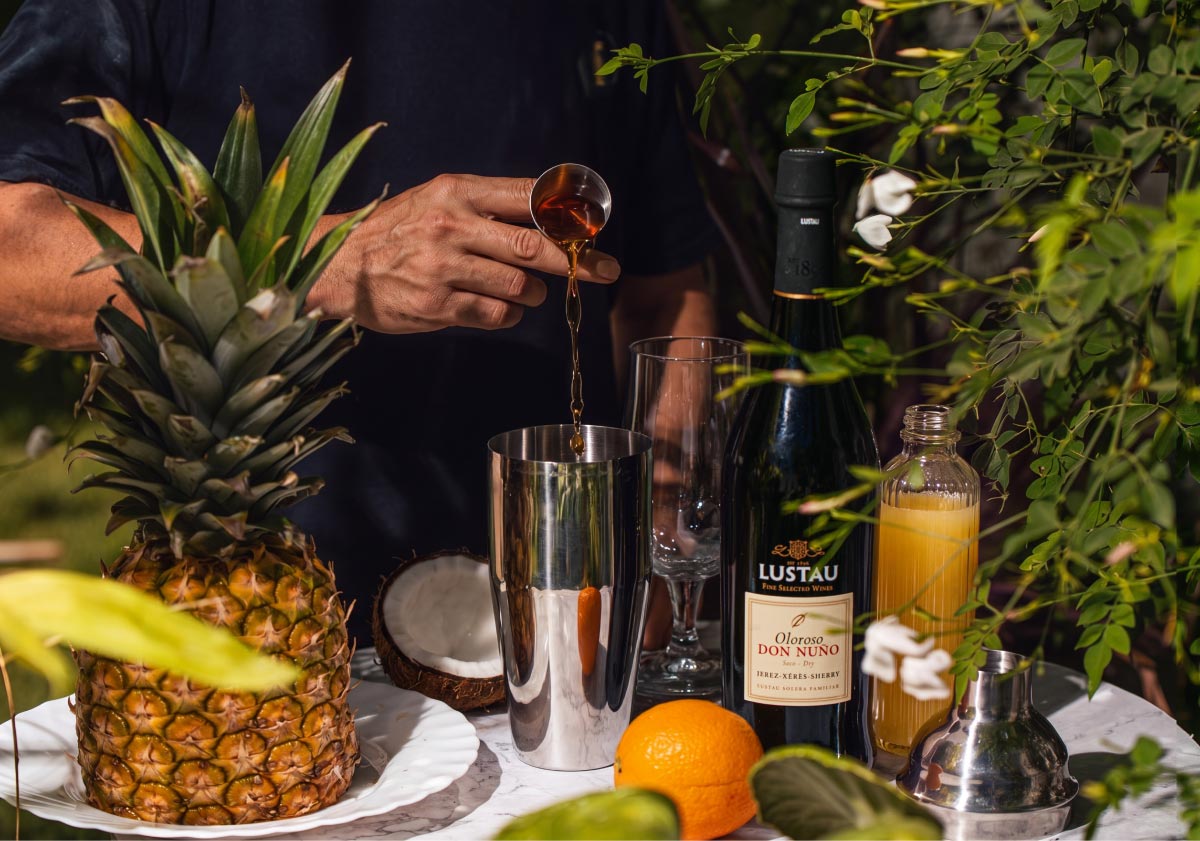
1. Add all ingredients to a shaking tin
2. Add ice and shake until chilled
3. Strain into a tiki glass or tall glass with crushed ice
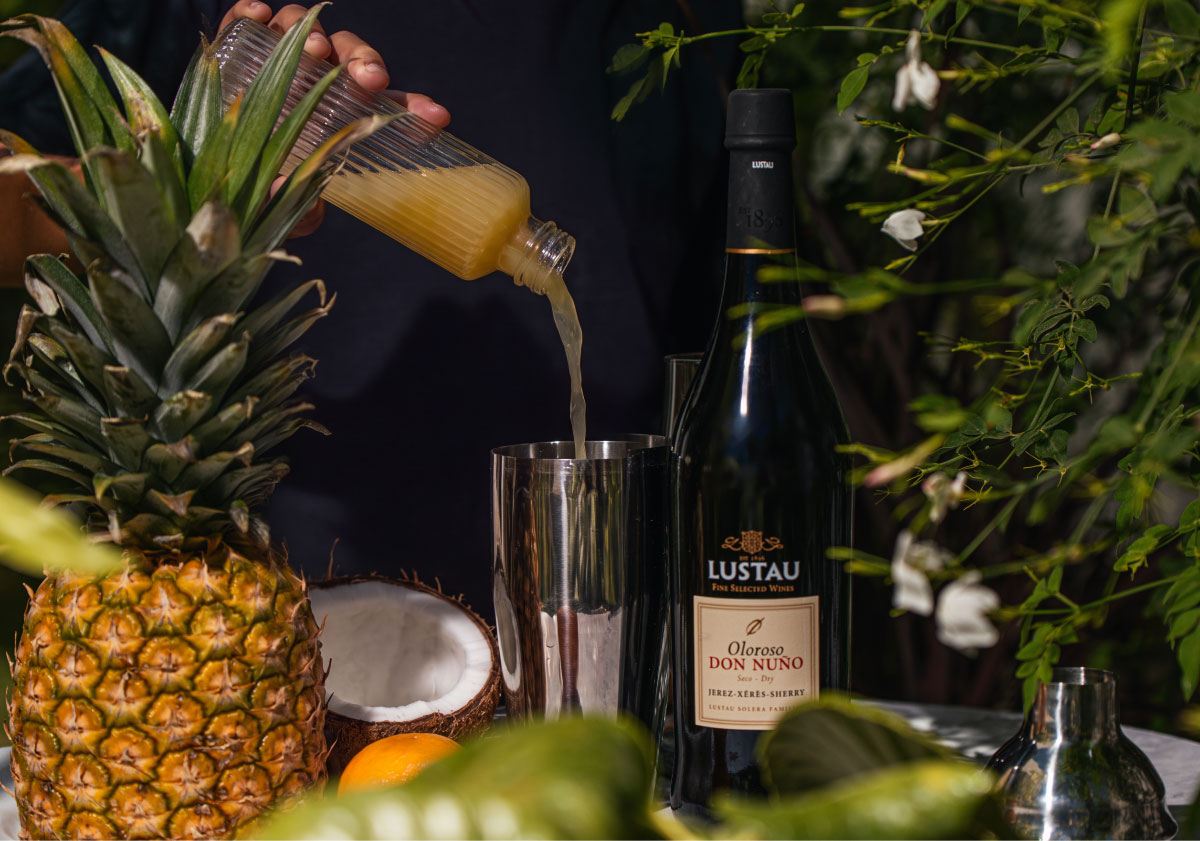
4. Garnish with grated nutmeg
FAQ about Boulevardier with Vermut Rojo
Can you use sherry in tiki cocktails?
Yes, sherry is widely used in traditional Tiki cocktail recipes. It is both a historical foundation of the genre and one of the most effective tools modern bartenders use to elevate, balance, and redesign tropical drinks. From 1940s classics like Trader Vic’s Fog Cutter to contemporary split-base Tiki specs, sherry solves the fundamental challenge of Tiki mixology: building complex, multi-layered flavor profiles without allowing heavy fruit juices, syrups, and high-proof spirits to turn flabby, cloying, or unbalanced.
Why does Oloroso work in a Painkiller?
In a classic Painkiller, oloroso sherry solves the drink’s core structural weakness: its tendency to become cloying, heavy, and palate-fatiguing due to the dense ratio of cream of coconut and tropical juices. By inserting Oloroso into the Painkiller template, either as a split-base modifier with Navy rum or as a dry accent, you introduce bone-dry oxidative structure, tannin, and molecular flavor synergies that transform a sweet beach drink into a complex, perfectly balanced serve.
Is a sherry Painkiller very sweet?
A Sherry Painkiller made with a dry sherry (such as oloroso, amontillado, or palo cortado) is significantly less sweet than the classic rum-only recipe. While it is still a rich, tropical drink, dry sherry strips away cloying sugar weight and grounds the cocktail with toasted, nutty structure.
What glass should I use for a Painkiller?
A Hurricane Glass (15-20oz or 450-600ml) or a Ceramic Tiki Mug (14-18oz or 420-540ml) are the classic vessels for a Painkiller. A Double Old Fashioned / Mai Tai Glass are other acceptable vessels often used at many craft cocktail bars.